
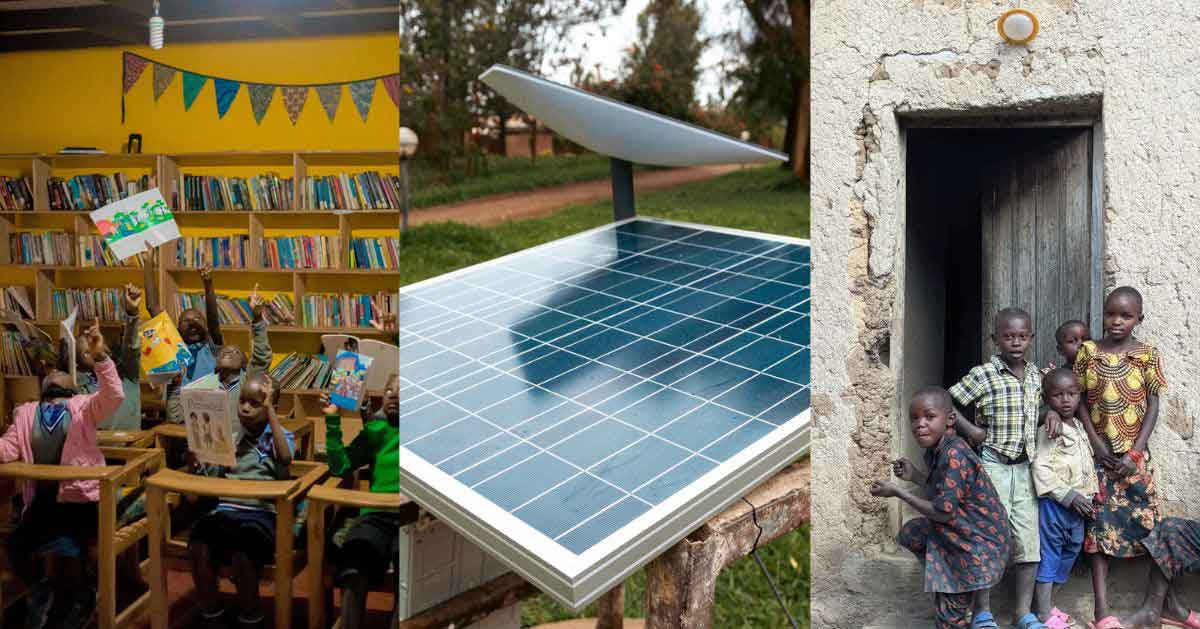
In the heart of East Africa, a quiet revolution is unfolding one powered not by politics or protest, but by the sun. Across Kenya, thousands of schools are abandoning kerosene lamps and diesel generators in favor of solar energy. This transformation is not merely about keeping lights on; it is about redefining what education means in communities that have long been left in the dark. Kenya’s solar school revolution is a compelling narrative of innovation, resilience, and the pursuit of equitable learning opportunities.
The Dawn of a New Era in Kenyan Education
For decades, millions of Kenyan students faced a common adversary: darkness. In rural and peri-urban areas, access to reliable electricity was a distant dream. According to the Kenya National Bureau of Statistics, nearly 70 percent of rural schools remained off-grid as recently as 2015. Without electricity, students relied on dim kerosene lamps or studied outdoors while daylight lasted. Libraries sat unused after sunset. Computer labs, where they existed, gathered dust. Science experiments requiring refrigeration or consistent power were impossible. The digital divide was not just about devices—it was about the absence of power to charge them.
The turning point arrived through a combination of falling solar panel prices, innovative financing models, and a growing recognition that energy access is foundational to quality education. What began as scattered pilot projects has evolved into a nationwide movement. Today, Kenya stands as a global leader in off-grid solar adoption, with schools at the forefront of this transition.
Understanding the Scope of the Transformation
Kenya’s solar school revolution is not a single program but a constellation of initiatives involving government agencies, private companies, non-profit organizations, and community cooperatives. Together, they have installed solar systems in more than 2,000 schools since 2018, with projections indicating exponential growth in the coming years.
The scale of impact is measurable in concrete terms. Schools with solar power report:
A. Extended learning hours, with evening study sessions becoming possible for the first time
B. Reduced operational costs, as money previously spent on kerosene and diesel is redirected toward teaching materials
C. Improved teacher retention, particularly in remote areas where electrified housing attracts qualified educators
D. Enhanced student performance, with early studies showing improved test scores in schools with reliable lighting
E. Expanded curriculum delivery, enabling practical instruction in science, technology, and vocational subjects
These outcomes are not merely incremental improvements—they represent a fundamental restructuring of what school can be in underserved communities.
The Technology Behind the Revolution
Modern solar solutions for Kenyan schools bear little resemblance to the rudimentary panels of a decade ago. Today’s systems are sophisticated, scalable, and increasingly intelligent. Typical installations include photovoltaic panels mounted on rooftops or ground frames, deep-cycle batteries for energy storage, charge controllers to prevent overcharging, and inverters to convert direct current into alternating current for standard appliances.
What distinguishes school systems from household installations is their capacity and resilience. A typical rural primary school might require:
A. 5 to 10 kilowatts of solar capacity to power classrooms, administrative offices, and basic appliances
B. Lithium-ion or advanced lead-acid batteries capable of storing three to five days of energy consumption
C. Smart meters and monitoring systems that allow remote diagnostics and predictive maintenance
D. Modular designs that permit gradual expansion as school needs grow
E. Lightning protection and surge suppression equipment suited to tropical thunderstorm conditions
Importantly, these systems are designed for local conditions. Installers must account for seasonal cloud cover, dust accumulation on panels, and the intense heat that can reduce battery efficiency. Successful projects incorporate these variables from the outset rather than treating them as afterthoughts.
Financing Models That Made It Possible
Perhaps the most innovative aspect of Kenya’s solar school revolution is not technological but financial. Traditional development aid, while valuable, proved insufficient to address the scale of need. New approaches emerged that blended philanthropy with market mechanisms.
The most successful financing strategies include:
A. Pay-as-you-go models adapted from household solar systems, allowing schools to pay for electricity incrementally rather than bearing prohibitive upfront costs
B. Results-based financing, where donors or governments provide partial subsidies that increase when specific performance targets are met
C. Green bonds issued by Kenyan financial institutions specifically for educational infrastructure
D. Carbon credit programs that monetize emissions reductions from displacing kerosene and diesel
E. Public-private partnerships that leverage corporate social responsibility budgets alongside government allocations
These mechanisms recognize a crucial reality: schools are not profit centers, but neither are they charity cases. By treating them as investments with measurable social returns, financiers have unlocked capital flows previously unavailable for educational electrification.
Case Study: Transforming the Northern Frontier
Nowhere are the stakes higher than in Kenya’s arid and semi-arid lands. In counties such as Turkana, Mandera, and Garissa, temperatures routinely exceed 40 degrees Celsius, infrastructure is sparse, and security concerns complicate development work. Yet it is precisely here that solar schools have demonstrated their most profound value.
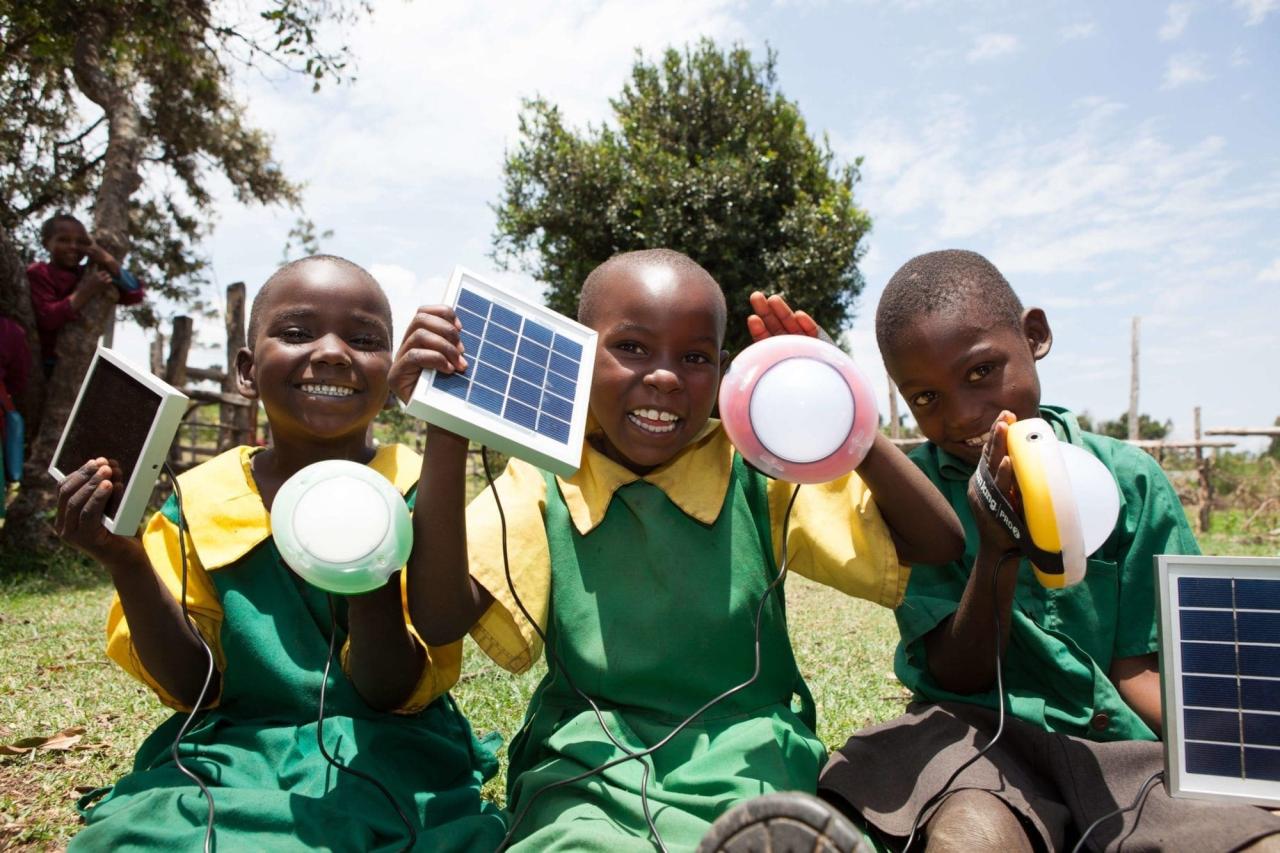
Consider the experience of a primary school in Lodwar, Turkana County. Before solar installation, the school had no electricity whatsoever. Textbooks were stored in locked cabinets to prevent theft—there was no light to read them after dark anyway. The head teacher conducted administrative work by candlelight. Vaccines for the school feeding program’s livestock projects spoiled within days. When the solar system arrived, it included not only classroom lighting but also a small refrigeration unit and water pumping capacity.
Within one year, enrollment increased by 40 percent. Parents who had previously kept children home to tend livestock now sent them to school, attracted by the prospect of studying under bright lights in the evening. The school became a community hub, hosting adult literacy classes after hours. A small internet terminal, powered entirely by solar panels, connected students to educational resources previously unimaginable.
This story repeats itself with variations across Kenya’s marginalized regions. Solar power does not simply add convenience—it rewrites the social contract between schools and the communities they serve.
Overcoming Persistent Challenges
Despite remarkable progress, Kenya’s solar school revolution faces obstacles that demand continued attention and innovation. Understanding these challenges is essential for sustaining momentum.
A. Maintenance and sustainability remain critical concerns. Solar panels typically carry 25-year warranties, but batteries require replacement every five to eight years. In remote areas, sourcing qualified technicians and replacement components can be difficult. Some schools have experienced system failures that remained unrepaired for months, eroding community confidence.
B. Theft and vandalism, while decreasing as technology becomes more familiar, still pose risks. Panels and batteries are valuable commodities in low-income areas. Solutions have included community guardianship programs, where parents take turns monitoring school compounds at night, and tamper-proof mounting systems that discourage unauthorized removal.
C. Curriculum integration lags behind infrastructure installation. Having computers is not the same as using them effectively. Many teachers received no training on incorporating digital tools into their pedagogy. The result is underutilized equipment and missed opportunities.
D. Gender disparities in technology access persist. In coeducational settings, boys often dominate access to computer terminals during free periods. Addressing this requires intentional scheduling and, in some cases, girls-only technology sessions.
E. Climate vulnerability introduces new uncertainties. More intense and prolonged droughts reduce water availability for panel cleaning. Extreme heat degrades battery performance. Flooding damages ground-mounted equipment. Adaptation strategies must evolve alongside installation techniques.
The Role of Policy and Regulatory Frameworks
Government action has accelerated Kenya’s solar school transition in ways that merit examination. Unlike many countries where renewable energy policy focuses exclusively on grid-scale generation, Kenya has crafted policies specifically addressing decentralized, off-grid solutions.
Key policy interventions include:
A. Zero-rating of value-added tax on solar equipment imports, reducing costs for educational institutions
B. Streamlined permitting processes for school installations, eliminating bureaucratic delays
C. Integration of electrification targets into national education sector plans, ensuring coordination between the ministries of energy and education
D. Quality assurance standards that prevent the dumping of substandard panels and batteries in the Kenyan market
E. Feed-in tariff provisions that allow schools with excess generation capacity to sell power back to local mini-grids
These policies did not emerge spontaneously. They resulted from sustained advocacy by civil society organizations, industry associations, and international development partners who recognized that piecemeal solutions would never achieve scale.
Environmental and Economic Co-Benefits
While improved educational outcomes remain the primary objective, Kenya’s solar schools deliver substantial collateral benefits that strengthen the case for continued investment.
Environmentally, each school equipped with solar power eliminates approximately three to five tons of carbon dioxide emissions annually compared to diesel generation. When multiplied across thousands of schools, this represents meaningful contribution to Kenya’s nationally determined contributions under the Paris Agreement. Indoor air quality improves dramatically as kerosene fumes disappear from classrooms and staff quarters. Children with asthma and other respiratory conditions breathe easier.
Economically, solar schools function as anchor loads that stimulate broader rural electrification. When a school installs a solar system, surrounding households often follow suit, benefiting from reduced costs as installers achieve economies of scale in the area. Local technicians gain valuable skills in photovoltaic installation and maintenance. Small businesses selling phone charging, cold drinks, or evening services cluster near electrified schools.
The cumulative effect is a virtuous cycle: better schools attract families, denser populations justify improved infrastructure, and improved infrastructure enables even better schools.
Community Participation and Local Ownership
Successful solar school projects share a common characteristic: meaningful community involvement from inception. Top-down installations, however technically competent, frequently fail to achieve long-term sustainability. Communities that participate in planning, contribute labor or resources, and share responsibility for security develop genuine ownership.
Effective community engagement strategies include:
A. Pre-installation meetings where parents and local leaders discuss project benefits and obligations
B. Formation of school energy committees with community representation
C. Contribution of locally available materials such as sand, gravel, or security fencing
D. Training of community members in basic system maintenance and troubleshooting
E. Transparent financial reporting on any fees collected for equipment use or maintenance funds
This participatory approach transforms solar installation from a donor intervention into a community achievement. Schools become sources of collective pride rather than passive recipients of external assistance.
Digital Inclusion and 21st Century Skills
The convergence of solar electrification with expanding mobile broadband coverage creates unprecedented opportunities for digital learning. Kenya’s mobile money system M-Pesa demonstrated the country’s capacity for technological leapfrogging. Solar schools now point toward similar transformations in education.
With reliable power, schools can maintain device charging stations, operate offline content servers, and participate in synchronous online learning sessions. Students who previously encountered computers only in examination settings now develop genuine digital fluency. They learn not merely to consume content but to create it—writing documents, building presentations, editing videos, and writing simple code.
These skills have immediate economic relevance. Kenya’s technology sector, centered in Nairobi’s Silicon Savannah, demands workers proficient in digital tools. Solar schools in remote counties now produce graduates capable of pursuing these opportunities, gradually decentralizing the country’s technology workforce and distributing economic benefits more equitably.
Lessons for Other Developing Nations
Kenya’s experience offers insights applicable far beyond its borders. While each country’s energy and education contexts differ, certain principles appear transferable.
A. Start with institutional demand rather than household consumption. Schools concentrate large numbers of beneficiaries in single locations, making electrification economically efficient.
B. Embrace hybrid models combining philanthropy and commerce. Neither pure aid nor pure market approaches achieve scale in educational electrification.
C. Prioritize maintenance capacity alongside installation. A functioning system delivers benefits for years; a failed system breeds cynicism that impedes future efforts.
D. Collect and publicize performance data. Demonstrated results attract additional investment and political support.
E. Integrate electrification with broader school improvement efforts. Light alone does not educate; it must accompany better teaching, relevant curricula, and supportive policies.

The Road Ahead: Scaling and Deepening Impact
Kenya’s solar school revolution has achieved remarkable success, yet the work remains incomplete. Thousands of schools still lack reliable electricity. Many that have received systems operate below full capacity due to maintenance gaps or underutilized equipment. The next phase must address both horizontal expansion and vertical deepening.
Horizontal expansion means reaching remaining unelectrified schools, particularly in extremely remote or insecure areas where installation costs are highest. This will require continued innovation in financing and delivery models, possibly incorporating drone delivery of components or subscription-based energy services.
Vertical deepening means extracting maximum benefit from existing installations. It involves teacher professional development, curriculum enhancement, community use of school facilities, and integration with agricultural extension services, health clinics, and other development sectors.
Neither dimension is optional. Partial electrification leaves the promise of solar schools unfulfilled.
Conclusion: Illuminating Minds, Powering Futures
Kenya’s solar school revolution demonstrates that transformative change is possible when technology, financing, policy, and community commitment align. It proves that developing nations need not replicate the centralized, fossil-fuel-dependent electrification pathways of industrialized countries. Leapfrogging is real, and its benefits extend far beyond kilowatt-hours.
The children studying under solar lights in Turkana, the teachers preparing lessons on solar-charged laptops in Kilifi, the parents attending evening meetings in solar-lit classrooms in Kisumu all are participants in a quiet revolution that reimagines what education can be. They are proof that darkness is not destiny.
As Kenya continues its journey toward universal energy access and quality education for all, its solar schools stand as both foundation and beacon. They illuminate not only classrooms but possibilities. They power not only appliances but ambitions. In doing so, they offer a model of development that is sustainable, equitable, and profoundly hopeful.