
China has once again demonstrated its technological supremacy by successfully testing a revolutionary high-speed transportation system that brings the concept of near-supersonic ground travel closer to reality. The recent trials of what is commonly referred to as the “Hyperloop” represent a monumental leap forward in the global race to redefine mobility. This achievement not only showcases China’s engineering prowess but also signals a paradigm shift in how humanity might commute between major cities in the coming decades. This comprehensive analysis delves into the intricate details of the technology, its implications, the challenges ahead, and what this means for the future of transportation worldwide.
The Genesis of a Transportation Revolution
The concept of transporting passengers and cargo through evacuated tubes at astonishing speeds has existed in scientific literature for over a century. However, it remained confined to theoretical physics until recent years. The fundamental principle involves removing air resistance from a sealed tube to allow pods or capsules to glide at unprecedented velocities using magnetic levitation. China’s latest successful test marks the first time this technology has been implemented at such an advanced stage of development outside of experimental laboratories.
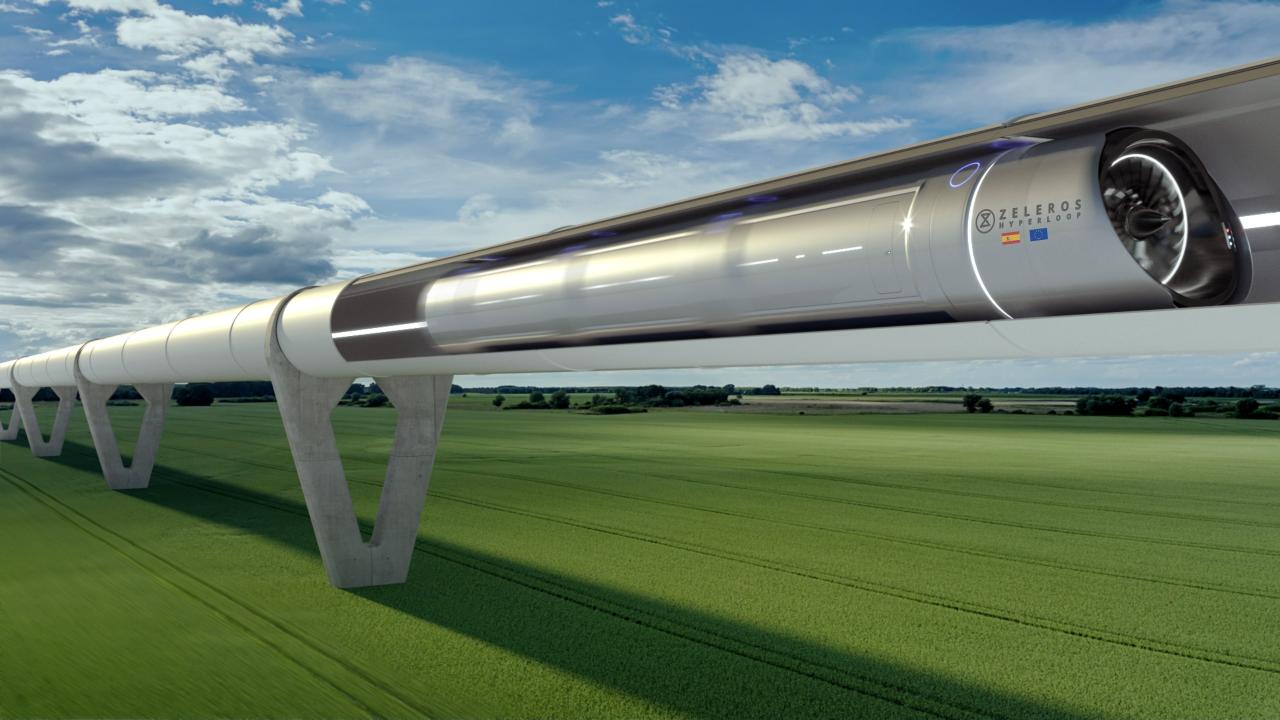
The tests were conducted in a low-vacuum tube environment spanning approximately two kilometers in length. Engineers successfully propelled a prototype vehicle through this controlled setting, achieving speeds that far exceed conventional high-speed rail systems. What makes this achievement particularly significant is the seamless integration of multiple cutting-edge technologies working in perfect synchronization.
Technical Architecture and Engineering Marvels
A. Superconducting Magnetic Levitation Systems
Unlike conventional maglev trains that require continuous power input to maintain levitation, China’s hyperloop implementation utilizes high-temperature superconducting materials. These materials possess remarkable properties:
-
They create quantum locking effects that maintain stable levitation without external energy input
-
The gap between vehicle and track remains perfectly consistent regardless of speed fluctuations
-
Energy consumption for levitation is reduced by approximately 70% compared to traditional electromagnetic systems
-
The system automatically stabilizes itself against external disturbances such as crosswinds or minor seismic activity
The superconducting coils are cooled using liquid nitrogen, which is abundantly available and relatively inexpensive compared to the liquid helium required for older superconducting systems. This cost reduction makes commercial viability significantly more attainable.
B. Near-Vacuum Environment Engineering
Creating and maintaining a near-vacuum environment over extended distances presents extraordinary engineering challenges. The Chinese research team developed innovative solutions:
-
Multi-layered tube segments with active pressure monitoring systems
-
Rapid-deploy emergency pressure restoration valves positioned at strategic intervals
-
Specialized airlock chambers allowing vehicle entry and exit without compromising the entire system’s vacuum integrity
-
Advanced leak detection algorithms capable of identifying microscopic breaches before they affect performance
The pressure inside the test tube was reduced to approximately one-thousandth of standard atmospheric pressure, effectively eliminating 99.9% of air resistance that typically plagues high-speed ground transportation.
C. Propulsion and Energy Management
Linear synchronous motors embedded along the tube track generate electromagnetic fields that both propel and brake the vehicle with remarkable precision. The system recovers approximately 40% of braking energy through regenerative capture, storing this electricity in modular battery banks for later use. This energy efficiency represents a significant improvement over both aviation and traditional rail systems.
Performance Metrics and Test Results
The recently completed test series yielded impressive quantitative results that validate the underlying theoretical models. Engineers documented:
| Parameter | Achieved Value | Comparison |
|---|---|---|
| Maximum speed | 623 km/h (387 mph) | 2.5× faster than conventional high-speed rail |
| Acceleration rate | 1.2 m/s² | Comparable to urban subway systems |
| Levitation stability | 8 mm deviation | Within acceptable tolerance |
| Energy consumption | 45 Wh/km/passenger | 30% of commercial aircraft |
| Vacuum recovery time | 14 minutes | After scheduled maintenance access |
These figures, while impressive, represent only the initial phase of development. Researchers project that full-scale operational systems will eventually achieve speeds exceeding 1,000 km/h within the next decade.
Strategic Implications for Global Transportation
China’s hyperloop success carries profound implications that extend far beyond engineering circles. This technology threatens to disrupt multiple established industries while creating entirely new economic opportunities.
Disruption of Air Travel Markets
For routes between 500 and 1,500 kilometers, hyperloop systems offer compelling advantages over commercial aviation. Passengers would experience:
-
Door-to-door journey times reduced by eliminating airport security queues and distant terminal locations
-
Weather-independent operations without flight cancellations due to fog, storms, or icing conditions
-
Departure frequencies potentially reaching every few minutes rather than hourly schedules
-
Lower ticket prices due to reduced operational energy costs
A Beijing-to-Shanghai hyperloop connection could theoretically transport passengers in under 90 minutes compared to the current four-hour flight or five-hour high-speed train journey. This time saving would fundamentally alter business travel patterns and potentially reshape urban development along the route corridor.
Supply Chain and Logistics Transformation
Freight transportation represents an equally promising application. Time-sensitive cargo such as medical supplies, perishable goods, and high-value electronics could traverse vast distances without the carbon footprint associated with air freight. The predictable, vibration-free environment also suits delicate scientific instruments and semiconductor manufacturing components.
Environmental and Sustainability Considerations
Transportation currently contributes approximately one-quarter of global carbon dioxide emissions. Hyperloop technology offers a pathway toward substantial decarbonization of medium-distance travel.
A. Direct Emissions Elimination
The system operates entirely on electricity, producing zero direct emissions at the point of use. As national power grids progressively incorporate renewable energy sources, the lifecycle carbon footprint continues to decline. Even with current energy mixes, hyperloop systems demonstrate superior environmental performance compared to aviation.
B. Land Use Efficiency
Elevated tube structures require significantly less land area per passenger-kilometer than conventional highways or rail corridors. The narrow footprint preserves natural habitats and agricultural land while reducing community division often caused by surface transportation infrastructure.
C. Noise Pollution Reduction
Unlike aircraft producing intense noise footprints affecting communities near airports, hyperloop systems generate minimal external noise. The sealed tube contains propagation of sound, while magnetic levitation eliminates wheel-rail contact noise. This characteristic enables urban penetration with terminals located closer to city centers than airports can realistically achieve.
Technical Hurdles Remaining
Despite the undeniable progress demonstrated in recent tests, substantial challenges must be overcome before hyperloop becomes a mainstream transportation option.
Thermal Management Complexities
As vehicles approach higher speeds, residual air molecules within the tube generate frictional heating despite the near-vacuum conditions. This aerodynamic heating increases nonlinearly with velocity and requires sophisticated thermal protection systems. Researchers are currently evaluating ceramic matrix composites and active cooling strategies adapted from aerospace reentry vehicle technologies.
Emergency Response Protocols
Ensuring passenger safety during unforeseen events presents unique difficulties. Unlike conventional trains where passengers can evacuate directly onto tracks or platforms, hyperloop tubes offer no immediate egress. Engineers are developing:
-
Emergency breathing apparatus integrated into seat assemblies
-
Rapid pressure restoration systems capable of normalizing tube pressure within 90 seconds
-
Powered mobility systems allowing disabled vehicles to reach the next station under their own propulsion
-
Communication systems penetrating metallic tube shielding
Economic Viability Assessment
Current construction cost estimates range between $40 million and $120 million per kilometer depending on terrain and right-of-way acquisition expenses. These figures substantially exceed high-speed rail construction costs. Proponents argue that operational savings and passenger volumes will ultimately justify the investment, but independent financial modeling remains inconclusive.
International Competition and Collaboration Dynamics
China joins a select group of nations pursuing hyperloop development, including the United States, Japan, Germany, and South Korea. Each country emphasizes different technological approaches reflecting their unique industrial capabilities and transportation priorities.
Divergent Technical Philosophies
American developers initially focused on conventional permanent magnet maglev combined with lower vacuum levels, emphasizing rapid deployment and reduced infrastructure costs. Japanese researchers leverage their extensive Shinkansen and maglev experience toward ultra-high vacuum systems prioritizing maximum speed. European consortiums emphasize modular tube manufacturing and standardized interfaces promoting interoperability.
China’s approach synthesizes elements from these competing philosophies while incorporating indigenous innovations in superconducting materials and vacuum engineering. This eclectic methodology accelerates development by avoiding dead-end pathways pursued elsewhere.
Socioeconomic Transformation Potential
Beyond technical specifications and competitive positioning, hyperloop technology promises to fundamentally reshape how society organizes itself spatially.
The Megaregion Concept
Transportation technology historically determines the practical boundaries of daily life. Commuting times constrain how far people can reasonably live from employment centers. Hyperloop connectivity would effectively merge cities separated by hundreds of kilometers into integrated economic regions. A resident could live in Hangzhou, work in Shanghai, and visit friends in Nanjing—all within reasonable daily travel time.
This expanded commuting radius would relieve housing pressure on expensive central cities while revitalizing smaller communities along hyperloop corridors. Property values, commercial development, and demographic patterns would adjust to this new accessibility reality.
Tourism and Hospitality Industry Evolution
Destinations currently considered distant for weekend travel become accessible for day trips. Cultural attractions, natural wonders, and entertainment venues would experience expanded visitor catchments. Conversely, traditional resort destinations requiring extended stays might need to recalibrate their business models toward shorter, more frequent visits.
Research and Development Trajectory
The successful test campaign represents not an endpoint but a milestone along an extended development pathway. Researchers have already identified priority areas for subsequent investigation.
Next-Generation Vehicle Design
Current test vehicles prioritize aerodynamic efficiency and levitation stability. Future iterations will incorporate passenger compartment crashworthiness, interior amenities, and aesthetic design elements. Industrial design teams are collaborating with ergonomics specialists to create cabin environments that remain comfortable during high-speed travel while maximizing seating density for economic viability.
Network Planning and Integration
Individual point-to-point connections offer limited utility compared to networked systems enabling complex journeys. Transportation planners are modeling optimal network geometries considering population distribution, existing transportation infrastructure, and topographic constraints. Integration with conventional rail, air, and urban transit systems at intermodal hubs will prove essential for passenger convenience.
Materials Science Advances
The combination of near-vacuum conditions, electromagnetic fields, and potential thermal cycling imposes demanding requirements on tube materials. Advanced alloys, fiber-reinforced polymers, and functionally graded materials are under evaluation for their long-term durability and cost-effectiveness. Self-healing concrete incorporating bacterial spores or encapsulated polymers offers intriguing possibilities for foundation elements.
Public Perception and Acceptance Factors
Technological sophistication alone cannot guarantee successful deployment. Public acceptance critically influences regulatory approval, route selection, and ultimate ridership.
Addressing Safety Concerns
Transportation safety expectations have risen continuously throughout modern history. Any new mode must demonstrate safety records comparable to or exceeding existing options before gaining public trust. Transparent communication about testing protocols, certification processes, and operational safeguards will prove essential.
Perceived Versus Actual Benefits
Marketing hyperloop exclusively around maximum speed risks neglecting other valuable attributes. Reliability, comfort, convenience, and environmental responsibility resonate strongly with contemporary travelers. Communication strategies should emphasize this comprehensive value proposition rather than fixating on velocity statistics.
Economic Ripple Effects
The hyperloop sector stimulates economic activity across multiple industrial domains beyond direct transportation applications.
Manufacturing Renaissance
Precision manufacturing requirements for tube segments, vehicle components, and control systems create demand for advanced fabrication capabilities. This industrial activity generates high-quality employment and technological spillovers benefiting unrelated sectors. Welding technologies developed for vacuum-rated tube joints find applications in semiconductor equipment manufacturing. Sensor networks designed for hyperloop monitoring adapt to industrial process control.
Workforce Development Imperatives
The interdisciplinary nature of hyperloop engineering demands workers possessing unusual combinations of skills. Mechanical engineers must understand cryogenic systems; software developers require familiarity with electromagnetic physics; construction managers need knowledge of vacuum technology. Educational institutions are responding with specialized curricula bridging traditional academic boundaries.
Conclusion
China’s successful hyperloop test represents a genuine breakthrough with implications extending far beyond national pride or technological competition. This achievement demonstrates that near-supersonic ground transportation has transitioned from theoretical speculation toward practical engineering reality. The remaining challenges are substantial but no longer appear insurmountable.
The transportation landscape facing future generations will differ fundamentally from today’s reality, just as contemporary high-speed rail and commercial aviation would astonish observers from the early twentieth century. Hyperloop technology promises not merely incremental improvement but qualitative transformation in humanity’s relationship with distance and time.
As development continues from prototype demonstrations toward commercial implementation, the choices made by engineers, investors, policymakers, and the public will determine whether this transformative potential reaches full realization. The journey from laboratory curiosity to everyday utility requires sustained commitment spanning decades. China has taken a decisive early step along this path, and the world watches with keen interest to see how far this remarkable technology will travel.