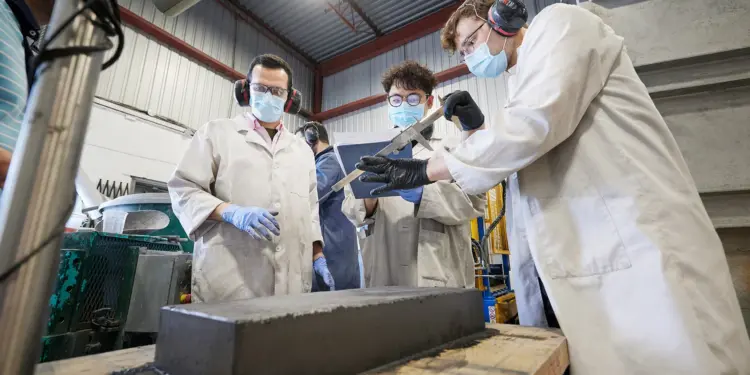
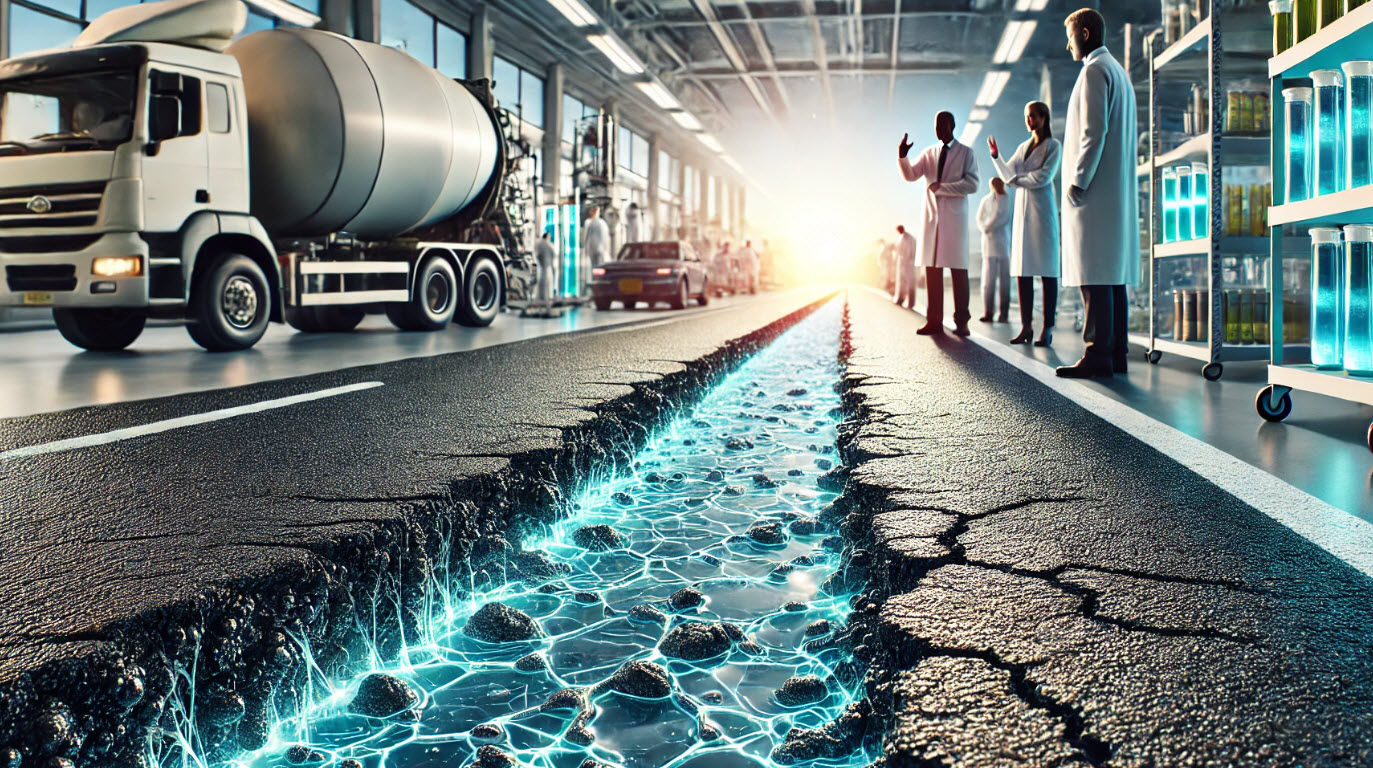
The future of infrastructure maintenance has arrived, and it originates from Germany’s most innovative engineering laboratories. German researchers have successfully developed a groundbreaking self-healing road technology that promises to transform the global transportation sector. This remarkable innovation addresses one of the most persistent and costly challenges faced by governments and taxpayers worldwide: the relentless deterioration of asphalt pavements. By embedding specialized healing agents directly into road materials, German scientists have created surfaces that can repair their own cracks, significantly extending road lifespan while reducing maintenance expenses and traffic disruptions.
The Genesis of a Revolutionary Concept
The concept of self-healing materials is not entirely new to the scientific community. Nature has long demonstrated remarkable regenerative capabilities, from human skin repairing itself after cuts to trees sealing wounds in their bark. Inspired by these biological processes, materials scientists have spent decades attempting to replicate such self-repair mechanisms in synthetic substances. Germany, with its prestigious reputation for engineering excellence and substantial investment in infrastructure research, has emerged as the global leader in transforming this ambitious concept into practical reality.
The self-healing road project originated from collaborative efforts between multiple German research institutions, including technical universities and private sector construction material companies. These partnerships recognized that conventional road maintenance approaches had reached their practical and economic limits. Traditional methods rely entirely on human intervention after damage occurs, leading to inevitable deterioration between repair cycles. The German approach fundamentally reimagines this paradigm by embedding repair capabilities directly within the road structure itself.
Understanding the Science Behind Self-Healing Asphalt
A. The Core Mechanism
The self-healing technology operates through two primary methodologies that researchers have refined through extensive laboratory testing and field trials. The first approach involves incorporating tiny porous particles, often composed of recycled plant materials or specialized polymers, saturated with rejuvenating oils. These microscopic capsules remain dormant within the asphalt mixture during normal conditions. However, when traffic stress or environmental factors cause cracks to form, the mechanical forces rupture these capsules, releasing their oil content directly into the damaged areas. This released oil softens the surrounding bitumen, allowing it to flow and effectively seal the fissures.
B. The Induction Heating Alternative
The second method utilizes induction heating technology, representing an active rather than passive healing approach. Researchers incorporate fine steel wool fibers or other conductive metallic particles throughout the asphalt matrix. When cracks appear, mobile heating units pass over the affected surface, generating electromagnetic fields that heat the metallic components. This controlled heating process raises the temperature of the surrounding bitumen, reducing its viscosity and enabling it to flow into and fill the cracks. Upon cooling, the bitumen hardens again, restoring structural integrity and waterproofing properties.
C. Multi-Phase Healing Process
The actual healing sequence follows a carefully orchestrated physical and chemical progression. Initially, the healing agent must reach the damaged location through capillary action or diffusion mechanisms. Subsequently, chemical interactions between the healing agent and the aged bitumen restore the binder’s original adhesive characteristics. Finally, the repaired zone achieves sufficient mechanical strength to withstand ongoing traffic loads without immediate re-cracking. German researchers have successfully optimized each phase through precise material formulation and application techniques.
Environmental and Economic Implications
The environmental benefits of self-healing roads extend far beyond reduced maintenance frequency. Traditional asphalt production and road repair operations generate substantial carbon emissions through material extraction, transportation, and energy-intensive heating processes. By extending pavement service life by an estimated 25 to 35 percent, this technology significantly reduces the construction industry’s carbon footprint. Furthermore, many healing agents utilize recycled materials, including waste cooking oils and industrial byproducts, creating circular economy advantages while diverting materials from landfills.
Economic calculations further strengthen the case for widespread adoption. German transportation authorities currently allocate billions of euros annually to road maintenance, with costs rising as infrastructure ages and traffic volumes increase. Self-healing surfaces substantially reduce the frequency of major rehabilitation projects while minimizing the need for emergency pothole repairs. Perhaps most significantly, decreased construction activity translates directly to fewer traffic delays, lane closures, and congestion-related productivity losses. Conservative estimates suggest national implementation could yield annual savings exceeding several hundred million euros once the technology achieves commercial scale.

Technical Challenges and Engineering Solutions
Despite impressive progress, German researchers acknowledge remaining challenges requiring continued innovation. The uniform distribution of healing capsules throughout asphalt mixtures presents manufacturing difficulties, as inadequate dispersion creates zones lacking repair capability. Similarly, balancing capsule durability against reliable rupture characteristics demands precise engineering. Capsules must withstand aggressive mixing processes and years of traffic loading without premature failure, yet reliably release their contents when genuine cracks develop.
Researchers have addressed these challenges through sophisticated materials engineering approaches. Advanced polymer encapsulation techniques now produce healing capsules with tunable mechanical properties, allowing manufacturers to adjust rupture thresholds according to specific application requirements. High-traffic highways receive capsules with greater mechanical resistance, while lower-volume roads utilize more sensitive variants. Additionally, computer modeling and simulation tools enable researchers to predict healing agent distribution patterns and optimize mixing protocols before committing to expensive production runs.
Comparative Analysis: Germany Versus Global Competitors
While Germany currently leads self-healing road development, international competition continues intensifying. The Netherlands has pioneered research into bacteria-based self-healing concrete, utilizing microorganisms that precipitate calcium carbonate to seal cracks. Chinese researchers have explored shape-memory polymers that return to original dimensions when heated. British laboratories have investigated microcapsule systems similar to the German approach but utilizing different shell materials and healing chemistries.
Germany maintains its competitive advantage through several distinctive factors. The nation’s well-funded research infrastructure enables long-term, high-risk projects without immediate commercial pressure. Close collaboration between academic researchers and major construction material producers facilitates rapid technology transfer from laboratory to field applications. Furthermore, German quality standards and certification requirements, while stringent, provide clear development targets and create consumer confidence once products achieve approval. This combination of research excellence, industrial partnership, and regulatory clarity positions Germany favorably in the emerging global market for intelligent infrastructure materials.
Implementation Timeline and Commercial Availability
The journey from laboratory breakthrough to widespread commercial deployment follows a carefully structured progression. Current field trials on selected German federal highways and municipal roads began in 2022, with preliminary results confirming laboratory findings under realistic traffic and weather conditions. These test sections undergo continuous monitoring through embedded sensors and regular visual inspections, generating valuable performance data that informs subsequent formulation refinements.
The projected commercialization timeline anticipates limited product availability for specialized applications by late 2025. Early adopters will likely include airport operators seeking to minimize runway closures, port authorities managing heavy-load container terminals, and industrial facility owners requiring durable pavements with minimal maintenance disruptions. Broader availability for general highway and municipal road applications should follow between 2027 and 2030, contingent upon successful completion of ongoing durability studies and establishment of manufacturing capacity sufficient to meet anticipated demand.
Technical Specifications and Performance Characteristics
A. Physical Properties
Self-healing asphalt formulations maintain physical characteristics comparable to conventional high-performance pavements. Standard penetration grades, softening points, and viscosity measurements fall within ranges familiar to civil engineers and paving contractors. This similarity eliminates the need for specialized placement equipment or extensive workforce retraining, significantly reducing adoption barriers. The incorporation of healing agents does not compromise load-bearing capacity or surface friction characteristics essential for traffic safety.
B. Healing Efficiency Metrics
Quantifying healing performance requires specialized testing protocols developed specifically for these novel materials. German researchers utilize controlled crack induction followed by monitored healing periods under various temperature and moisture conditions. Current formulations achieve between 65 and 85 percent recovery of original mechanical properties within 24 hours under favorable conditions. Induction-based systems can achieve nearly complete healing within minutes when mobile units pass over affected areas. Ongoing research aims to further improve healing speed and consistency across diverse environmental conditions.
C. Durability Considerations
Concerns regarding potential degradation of healing effectiveness over extended service periods have been addressed through accelerated aging studies simulating decades of environmental exposure. Results indicate that encapsulated healing agents retain approximately 80 percent of their original effectiveness after simulated ten-year service lives. Induction healing capability remains essentially unchanged throughout pavement life, as steel fibers do not degrade or deplete through repeated heating cycles.
Integration With Smart Infrastructure Systems
German researchers envision self-healing roads functioning as integrated components within broader smart city and intelligent transportation system frameworks. Embedded sensor networks could continuously monitor pavement condition, automatically detecting cracks when they first initiate and triggering responsive healing mechanisms. This closed-loop system would minimize the window between damage occurrence and repair completion, preventing small cracks from evolving into major structural failures.
Furthermore, vehicle-to-infrastructure communication protocols could enable equipped vehicles to report pavement anomalies they detect, creating distributed sensing networks far more comprehensive than stationary monitoring systems. Fleet management companies and transportation agencies would receive real-time pavement condition data, optimizing maintenance scheduling and route planning. These integration possibilities represent the convergence of multiple technological trajectories that together will define twenty-first century infrastructure systems.
Global Adaptation Potential
While developed primarily for German climatic and traffic conditions, self-healing road technology demonstrates considerable adaptability for international deployment. Tropical regions require formulations resistant to accelerated binder aging from intense ultraviolet radiation and high temperatures. Cold climate applications demand healing agents maintaining adequate fluidity at low temperatures. Heavy-load corridors necessitate enhanced mechanical strength and more robust capsule designs. German researchers actively collaborate with international partners to develop regionally optimized variants addressing these diverse requirements.
Developing nations present particularly compelling opportunities for this technology. Many rapidly urbanizing countries struggle with inadequate maintenance budgets and limited technical capacity for road preservation. Self-healing surfaces could maintain serviceability despite irregular maintenance schedules, preserving transportation access essential for economic development. Technology transfer programs and international development partnerships may accelerate beneficial deployment in regions where conventional maintenance systems consistently underperform.
Industry Response and Market Projections
The global construction materials industry has responded enthusiastically to German self-healing road developments. Major multinational corporations have established dedicated research groups exploring complementary technologies and potential acquisition or licensing arrangements with German patent holders. Industry analysts project the intelligent infrastructure materials market will experience compound annual growth exceeding 15 percent over the coming decade, with self-healing pavements representing the largest and fastest-growing segment.
Market penetration forecasts suggest self-healing materials could capture between 10 and 15 percent of the European premium pavement market by 2030, expanding to approximately 25 percent by 2040 as manufacturing costs decrease and specification familiarity increases. Achievement of these projections depends partly on intellectual property considerations, as patent protection may temporarily limit competitive pressures and maintain premium pricing. However, alternative technological approaches from other countries will likely create competitive dynamics beneficial to consumers.
Public Policy and Regulatory Considerations
German transportation policymakers have demonstrated proactive support for self-healing road innovation through multiple mechanisms. Research funding programs specifically target infrastructure sustainability technologies with substantial public benefit potential. Procurement regulations increasingly incorporate life-cycle cost analysis rather than lowest-initial-cost criteria, enabling self-healing products to compete effectively despite higher upfront expenses. Performance specification frameworks are being updated to accommodate novel materials with unconventional failure modes and maintenance requirements.
European Union transportation policy similarly emphasizes innovation and sustainability, providing additional funding sources and regulatory harmonization across member states. Standardization organizations have initiated preliminary work on testing protocols and performance criteria specifically for self-healing construction materials. These policy developments create favorable conditions for technology adoption while ensuring appropriate safety and performance oversight.
Societal Benefits Beyond Direct Users
The advantages of durable, self-maintaining road infrastructure extend far beyond transportation agencies and road users. Reliable road networks support supply chain efficiency, reducing consumer goods costs through lower transportation expenses. Decreased construction activity reduces noise and air pollution affecting communities adjacent to major road corridors. Extended pavement life conserves natural aggregates and petroleum-derived bitumen, preserving non-renewable resources for future generations. Reduced maintenance frequency decreases worker exposure to hazardous traffic conditions, improving occupational safety outcomes.
Perhaps most significantly, successful deployment of self-healing roads could transform public expectations regarding infrastructure performance and inspire similar innovations across other civil engineering domains. Self-healing bridges, tunnels, railway tracks, and airport runways may follow as materials scientists adapt fundamental principles to different structural systems and loading conditions. The German achievement thus represents not merely an incremental improvement but rather a paradigm shift with implications extending across the entire built environment.
Frequently Asked Questions About Self-Healing Roads
Question: How much additional cost do self-healing materials add to road construction projects?
Answer: Current pilot production runs indicate approximately 25 to 35 percent cost premiums compared to conventional high-performance asphalt. However, volume production and process optimization are expected to reduce this differential substantially within five to seven years.
Question: Can self-healing technology repair large cracks and potholes?
Answer: Current systems effectively address hairline cracks and micro-damage up to approximately two millimeters in width. Larger defects still require conventional repair methods, though self-healing surfaces experience significantly reduced progression from small cracks to major failures.

Question: Is the technology compatible with recycled asphalt materials?
Answer: German researchers have successfully developed formulations incorporating up to 40 percent reclaimed asphalt pavement while maintaining adequate healing performance. Ongoing research aims to increase recycled content further without compromising self-repair capabilities.
Question: How do extreme weather conditions affect healing efficiency?
Answer: Low temperatures slow healing agent flow and chemical reactions, extending required healing periods. Induction heating systems overcome this limitation through active warming. High temperatures accelerate healing but may reduce capsule stability over extended periods.
Conclusion: A Pivotal Moment for Infrastructure Innovation
Germany’s self-healing road invention represents one of the most significant infrastructure technology breakthroughs of recent decades. By embedding repair capabilities directly within pavement materials, German researchers have challenged fundamental assumptions about infrastructure as inherently passive and dependent upon continuous external intervention. This innovation simultaneously addresses multiple pressing challenges: aging infrastructure systems, constrained public budgets, environmental sustainability imperatives, and growing public impatience with perpetual construction delays.
The technology’s eventual global impact will depend upon successful navigation of remaining technical challenges, establishment of cost-competitive manufacturing capacity, and acceptance by traditionally conservative construction industry stakeholders. However, the fundamental value proposition is compelling and increasingly difficult to ignore. Roads that heal themselves promise not merely incremental efficiency improvements but rather fundamental redefinition of the relationship between infrastructure systems and the societies they serve. Germany has provided the essential breakthrough; global adoption and continuous refinement will determine its ultimate legacy.