The landscape of emergency medical response is undergoing a radical transformation, driven by innovations in unmanned aerial vehicle technology. No longer confined to military applications or recreational photography, drones have emerged as critical tools in the fight against time-sensitive medical emergencies. From remote villages to congested urban centers, these flying sentinels are rewriting the rules of what’s possible when every second counts.
The Critical Window: Why Speed Matters in Emergency Medicine
In medical emergencies, time is the most precious commodity. For cardiac arrest patients, every minute without defibrillation reduces survival chances by 7-10%. For stroke victims, the window for effective clot-busting medication is approximately four and a half hours. Severe allergic reactions can become fatal within minutes without epinephrine. Trauma patients with massive hemorrhaging need blood products immediately.
Traditional emergency medical services face inherent limitations. Ground ambulances navigate traffic congestion, challenging terrain, and geographical barriers. Rural communities often endure response times exceeding 30 minutes. Helicopter ambulances, while faster, carry astronomical operational costs ranging from $2,000 to $15,000 per flight, require specialized landing zones, and are grounded during adverse weather conditions.
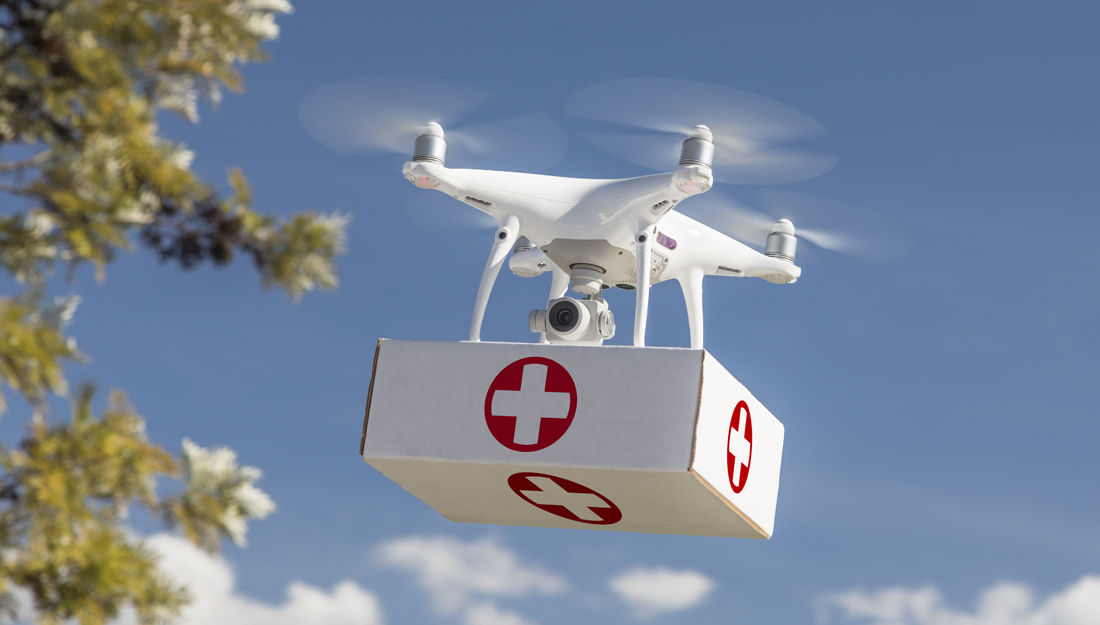
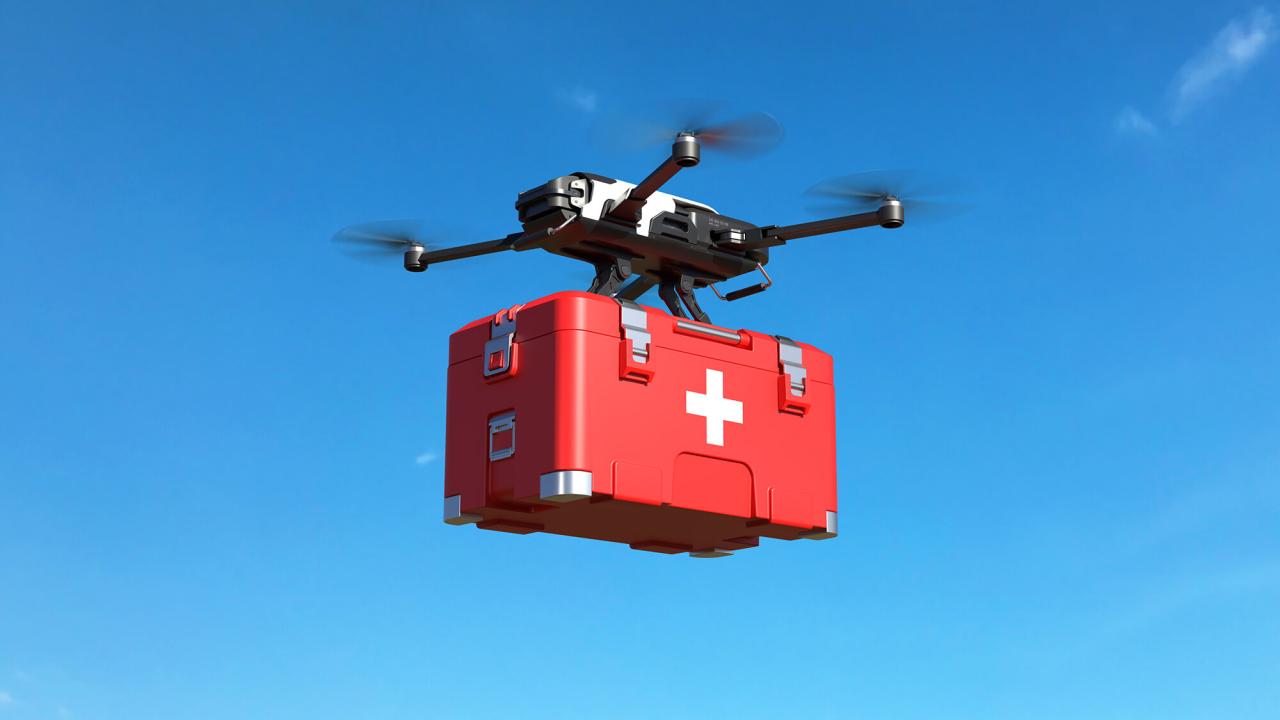
This is where medical delivery drones bridge an critical gap. These autonomous aircraft can travel at speeds of 60-80 miles per hour, bypass ground obstacles entirely, and deliver essential medical supplies directly to precise coordinates within minutes.
Understanding Modern Medical Drone Technology
Today’s emergency response drones represent the convergence of multiple advanced technologies. These are not off-the-shelf consumer quadcopters but sophisticated systems engineered specifically for medical logistics.
A. Aerodynamic Frame Design – Modern medical drones utilize lightweight carbon fiber construction with weather-resistant properties. The aerodynamic profiles minimize drag while maximizing payload capacity, enabling transport of items weighing up to 4-5 kilograms over distances exceeding 100 kilometers.
B. Precision Navigation Systems – Redundant GPS modules, inertial measurement units, and obstacle avoidance sensors work in concert. Advanced drones employ LiDAR and computer vision algorithms that detect power lines, trees, and buildings, automatically calculating safe alternative routes.
C. Smart Temperature Control – Medical payloads often require strict temperature maintenance. Specialized drones incorporate insulated compartments with active cooling or heating elements. Blood products maintain viability at 2-6°C, while certain medications require protection from freezing. Real-time temperature monitoring transmits data continuously to ground control stations.
D. Secure Payload Release Mechanisms – Rather than landing, many medical drones hover at altitude and lower packages via tethers. This approach eliminates landing zone requirements and reduces security vulnerabilities. Winch systems deploy payloads with surgical precision, even in confined spaces.
E. Beyond Visual Line of Sight Capabilities – Regulatory advancements now permit BVLOS operations, where drones travel beyond the pilot’s visual range. This expands service radius dramatically, connecting central medical depots with distant communities.
Real-World Applications Across Medical Emergencies
The theoretical benefits of medical drones have materialized into operational programs worldwide. These initiatives demonstrate remarkable diversity in application, proving the technology’s adaptability.
Cardiac Arrest Response Networks
Sweden’s Karolinska Institutet conducted groundbreaking research deploying automated external defibrillators via drones. In simulation studies, drones arrived before ambulances in 93% of cases, with median time savings of 16 minutes. For cardiac arrest, those minutes represent the difference between neurological recovery and permanent brain damage.
The program operates through an integrated dispatch system. When emergency calls report suspected cardiac arrest, the dispatch center simultaneously alerts traditional ambulances and activates nearby drone bases. The AED-equipped drone navigates to the scene, arriving sometimes within three minutes. Bystanders receive voice-guided instructions for retrieving the device and applying defibrillation pads.
Rural Healthcare Supply Chains
In Scotland’s remote Western Isles, communities previously waited days for prescription medications and diagnostic samples. The National Health Service Scotland initiated drone operations connecting hospitals on the mainland with island health centers. Chemotherapy medications, blood tubes for testing, and emergency antibiotics now traverse the 50-mile sea crossing in 15 minutes rather than six hours via ferry.
This program demonstrates particular value during winter months when rough seas suspend ferry operations. Patients requiring urgent medication no longer face the impossible choice of waiting or attempting dangerous sea crossings. The drones fly above the storm-tossed waters, undeterred by conditions that stop conventional transportation.
Mass Casualty Incident Support
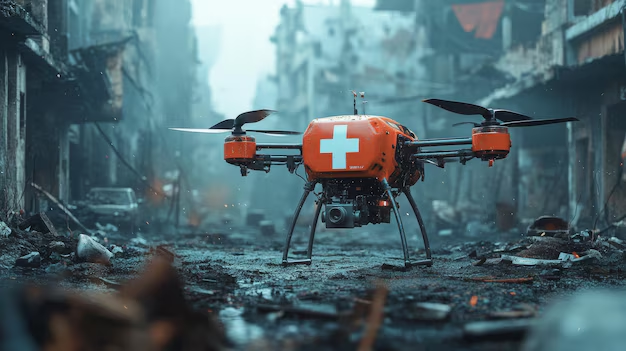
Natural disasters and mass casualty events overwhelm local medical resources while simultaneously damaging infrastructure. Following hurricanes in Puerto Rico and earthquakes in Haiti, medical supply drones delivered essential medications, vaccines, and diagnostic equipment to cut-off communities. Traditional supply chains required weeks to restore road access; drones began operations within hours.
Military medical units increasingly deploy drone logistics during humanitarian missions. Portable launch systems enable rapid establishment of supply corridors across hostile or damaged terrain. Field hospitals receive continuous resupply without exposing ground convoy personnel to security threats.
Organ Transport Networks
Transplant organs face strict ischemic time limits—hearts approximately 4-6 hours, lungs 6-8 hours, kidneys 24-36 hours. Traditional transport relies on commercial flights or organ procurement organization vehicles, introducing delays and scheduling complexities.
University of Maryland Medical Center successfully demonstrated drone transport of a research kidney. The aircraft maintained constant temperature monitoring, vibration dampening, and telemetry. While regulatory frameworks continue developing for human transplant transport, the technical capability is proven. This application could expand donor organ catchment areas significantly, matching more patients with compatible donors.
Overcoming Implementation Barriers
Despite compelling evidence supporting medical drone deployment, several significant challenges require resolution before widespread adoption becomes reality.
A. Regulatory Framework Development – Aviation authorities worldwide grapple with integrating thousands of autonomous aircraft into already crowded airspace. The Federal Aviation Administration, European Union Aviation Safety Agency, and other regulatory bodies progressively approve expanded operations while maintaining safety standards. The progression typically moves from visual line of sight to extended visual line of sight, ultimately reaching beyond visual line of sight approval.
B. Public Acceptance and Privacy Concerns – Communities express understandable concern regarding drones overflying residential areas. Noise complaints, privacy worries, and safety fears require active mitigation. Successful programs emphasize community engagement, transparent communication, and tangible demonstrations of public benefit. Noise reduction technologies continue improving, with newer models producing significantly less acoustic signature than early prototypes.
C. Weather Limitations – Current drones operate within defined weather parameters. High winds, heavy precipitation, and extreme temperatures restrict operations. Ongoing research explores all-weather capable designs including de-icing systems, enhanced waterproofing, and more powerful propulsion overcoming wind resistance.
D. Payload Capacity Constraints – While sufficient for most medications, diagnostic samples, and AEDs, current payload limitations prevent drone transport of larger medical equipment or multiple units simultaneously. Ventilators, infusion pumps, and bulky trauma supplies exceed typical capacity. Future heavy-lift drone designs address this limitation through distributed multi-drone deliveries or single large-payload aircraft.
E. Charging and Maintenance Infrastructure – Drone networks require substantial ground infrastructure investments. Weatherproof docking stations with automated battery swapping or rapid charging capabilities remain expensive. Maintenance schedules, component replacement cycles, and fleet management systems add operational complexity beyond traditional ambulance services.
Economic Analysis: Cost Versus Value
Critics appropriately question whether medical drone investments represent optimal allocation of limited healthcare resources. Initial acquisition costs appear substantial specialized medical drones range from $15,000 to $50,000, with ground infrastructure adding significant expense.
However, comprehensive economic analysis reveals compelling value proposition:
-
Reduced Hospitalization Costs – Earlier intervention reduces disease severity, shortening hospital stays. Stroke patients receiving rapid thrombolysis require shorter rehabilitation periods. Cardiac arrest survivors with good neurological outcomes avoid years of institutional care.
-
Lower Transport Expenses – Ground ambulance transport costs continue rising, exceeding $1,200 per transport in many regions. Helicopter transport ranges from $12,000 to $25,000 per mission. Drone delivery costs approximate $50-120 per successful mission as programs achieve scale.
-
Productivity Preservation – Patients receiving timely treatment return to productive activities sooner. Family caregivers spend fewer days away from employment. Communities retain working-age members who might otherwise relocate seeking better emergency services.
-
Inventory Optimization – Centralized medical supply depots reduce redundant inventory across multiple facilities. Expensive, rarely-used antidotes and medications maintain availability through rapid drone delivery rather than costly stockpiling at every location.
-
Environmental Benefits – Electric drones produce zero direct emissions compared to gasoline-powered ambulances and jet-fueled helicopters. Healthcare systems increasingly prioritize environmental sustainability alongside clinical outcomes.
Future Horizons: Next Generation Medical Drone Capabilities
The current generation of medical delivery drones, impressive as they are, represents merely the initial phase of technological evolution. Researchers and engineers worldwide pursue ambitious enhancements.
Autonomous Medical Procedure Drones – Concept designs envision drones not merely delivering supplies but performing certain interventions directly. Japanese researchers explore drones equipped with automated external defibrillators that, upon landing, provide voice-prompted instructions for bystander use. More advanced concepts include auto-injector deployment for anaphylaxis and hemorrhage control tourniquet application.
Drone Emergency Medical Technician Assistants – Future systems may deploy drones carrying not just equipment but also communication links enabling remote physicians to guide bystanders through complex interventions. Augmented reality interfaces projected by the drone could display anatomical landmarks for procedures.
Swarm Logistics Coordination – Major incidents might trigger deployment of coordinated drone swarms. One aircraft delivers airway management supplies, another brings resuscitation medications, a third transports monitoring equipment. Artificial intelligence coordinates arrival sequencing based on clinical priorities.
Bi-Directional Sample Transport – While current programs emphasize supply delivery, return transport of diagnostic specimens, blood samples, and even microbiological cultures enables centralized laboratory analysis without requiring patient transport. This transforms rural healthcare delivery, granting remote populations access to sophisticated diagnostics previously unavailable.
Integration with Existing Emergency Systems
The most successful implementations recognize medical drones as complements rather than replacements for traditional emergency services. Optimal integration follows several established models:
A. Tiered Response Activation – Dispatch algorithms evaluate incoming emergency calls, determining which situations benefit from drone deployment. Cardiac arrest, anaphylaxis, airway obstruction, and severe bleeding trigger immediate drone launch alongside traditional ambulance dispatch.
B. First Responder Support – Volunteer first responders in rural communities receive notification when drones approach, ensuring someone retrieves and deploys delivered equipment. This hybrid model leverages both technological speed and human compassion.
C. Hospital Network Integration – Regional trauma centers maintain drone hubs serving spoke hospitals and clinics. Centralized inventory management reduces duplication while ensuring rapid deployment capability.
D. Cross-Jurisdictional Coordination – Medical drone networks inevitably cross municipal, county, and state boundaries. Successful programs establish interoperability agreements enabling seamless drone passage across jurisdictional lines without mission interruption.
Conclusion: Beyond Technology to Human Impact
Medical delivery drones represent far more than technological achievement they embody healthcare’s fundamental promise: to be there when needed most. Each successful mission represents someone receiving their second chance, a family preserved intact, a community member returning home.
The grieving spouse who never hears the words “if only we had arrived sooner.” The rural parent watching their child’s asthma attack resolve with medication delivered from 20 miles away in seven minutes. The trauma patient hemorrhaging after a farming accident receiving blood products before shock becomes irreversible. These outcomes transcend metrics, appearing in no economic analysis yet constituting the entire purpose of this endeavor.
As regulatory frameworks mature, public acceptance grows, and technological capabilities expand, medical drones will increasingly populate our skies. They fly not as cold machines but as emissaries of collective caring demonstrating that when emergency strikes, help travels on swift wings.
The question is no longer whether medical drones can save lives. They already do, daily, across multiple continents and countless communities. The question now is how rapidly we expand these networks, how equitably we distribute their benefits, and how creatively we apply this capability to ever-expanding medical challenges. The airspace above us holds not just potential but promise a promise of medicine without barriers, care without delays, and hope without geographical limits.