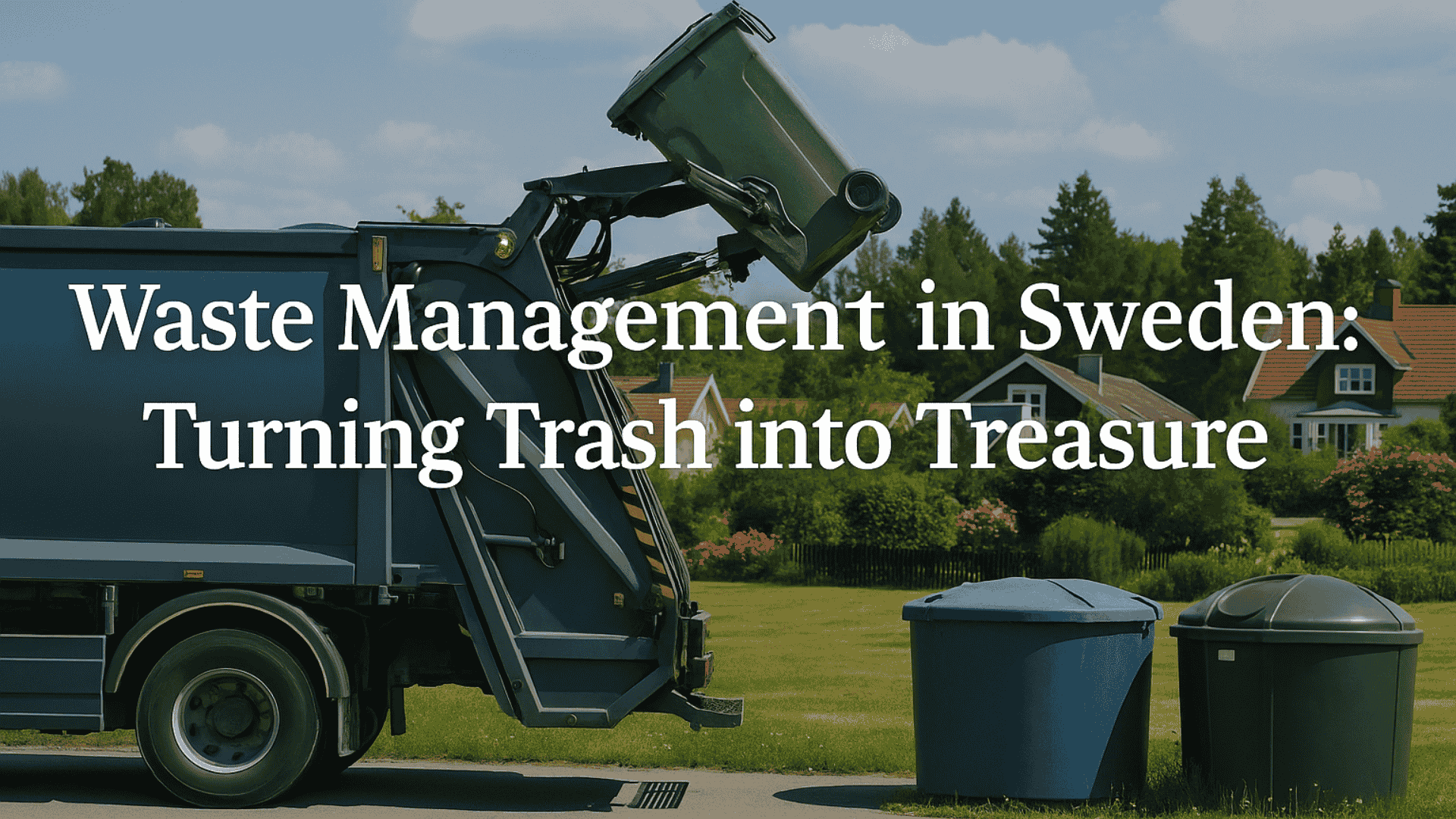
In an era where overflowing landfills and plastic-choked oceans dominate environmental headlines, one nation stands as a shimmering beacon of sustainability. Sweden, a country often associated with minimalist design and pristine natural landscapes, has quietly engineered a waste management miracle. The Scandinavian nation has transformed its relationship with garbage, viewing discarded materials not as worthless refuse, but as valuable commodities in a sophisticated circular economy. This revolutionary approach often termed the “Trash-to-Cash” system has positioned Sweden as a global leader in turning environmental challenges into economic opportunities.
The Genesis of a Waste-Free Vision
Sweden’s journey toward waste mastery did not happen overnight. During the 1960s and 1970s, the country faced the same mounting waste crises as its European neighbors. Overflowing dumps and contaminated groundwater prompted a fundamental shift in public consciousness. Rather than constructing larger landfills, Swedish policymakers asked a radical question: What if waste simply stopped existing?
This philosophical pivot birthed a comprehensive national strategy that prioritized prevention, reuse, and recovery over disposal. The Swedish Environmental Protection Agency began implementing aggressive targets that seemed impossible at the time. Today, those ambitions have materialized into staggering statistics. Less than one percent of Swedish household waste finds its way to landfills. To put this achievement in perspective, the European Union average hovers around 23 percent, while the United States still landfills approximately 50 percent of its municipal solid waste.
The brilliance of Sweden’s approach lies not in any single technological breakthrough, but in the seamless integration of policy frameworks, public participation, industrial innovation, and international cooperation. It represents a holistic reimagining of humanity’s relationship with material consumption.
Waste Hierarchy: The Philosophical Backbone
Sweden’s trash-to-cash empire rests upon a clearly defined waste hierarchy that prioritizes actions from most to least desirable. This framework, embedded into national legislation, guides every decision from household kitchens to corporate boardrooms.
A. Prevention and Reduction – The most coveted tier involves avoiding waste creation entirely. Swedish companies receive tax incentives for designing longer-lasting products, while repair cafes receive government support to extend product lifespans. Grocery chains have eliminated volume discounts that encouraged overbuying, and food retailers now prominently display soon-to-expire items at reduced prices.
B. Reuse and Preparation for Reuse – Products that cannot be prevented enter robust reuse systems. Second-hand markets flourish with cultural acceptance unmatched elsewhere. Municipal recycling centers feature dedicated sections for functional items, while clothing retailers offer in-store collection bins with customer discounts as participation rewards.
C. Material Recycling – When reuse becomes impractical, materials undergo transformation into new products. Glass, metal, paper, plastic, and electronics follow separate, highly efficient collection streams. Advanced sorting facilities employ infrared scanners, magnetic separators, and even artificial intelligence to achieve purity rates that make Swedish recyclables premium commodities on global markets.
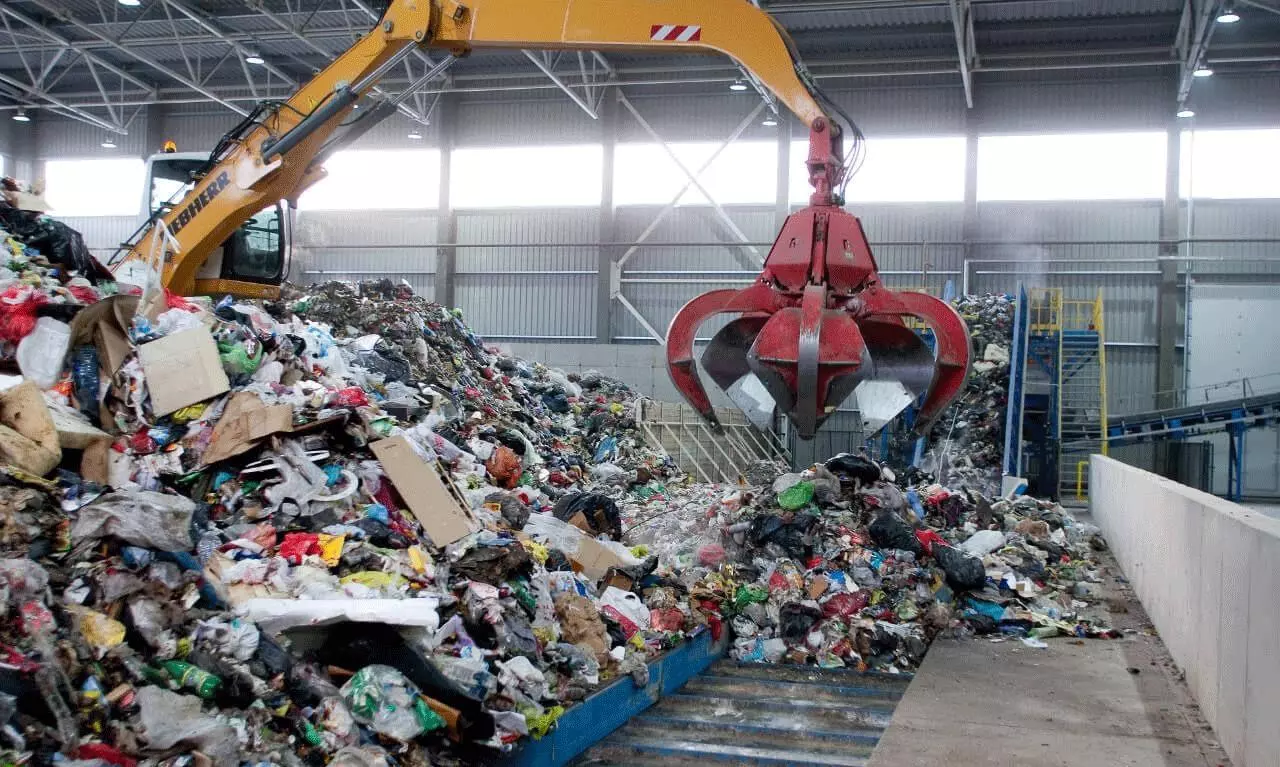
D. Other Recovery (Including Energy) – Materials unsuitable for recycling embark on a different journey. Sweden operates thirty-four waste-to-energy plants that convert non-recyclable combustibles into district heating and electricity. This tier represents the famous “cash” component of the trash-to-cash equation.
E. Disposal – The absolute last resort, reserved for hazardous substances and materials with no recovery potential whatsoever. Sweden’s near-elimination of this tier stands as its crowning achievement.
Waste-to-Energy: The Crown Jewel
The most internationally recognized element of Sweden’s system involves its sophisticated waste-to-energy infrastructure. These facilities, often mistakenly called incinerators, bear little resemblance to the polluting furnaces of decades past. Modern Swedish waste-to-energy plants operate with emissions so clean that their smokestacks release mostly water vapor and carbon dioxide—the latter already biogenic in origin from organic waste components.
These plants serve dual purposes. They eliminate non-recyclable waste while generating useful energy. A single ton of municipal waste contains approximately the same energy content as 200 liters of heating oil. By capturing this energy rather than burying it, Sweden displaces fossil fuels that would otherwise heat homes and power industries.
The economic mathematics prove compelling. Households pay fees for waste collection, while waste-to-energy facilities charge gate fees to accept materials. Simultaneously, these plants sell electricity to the national grid and hot water to district heating networks. This triple revenue stream—collection fees, gate fees, and energy sales—transforms garbage into gold.
Stockholm’s Hammarby Sjöstad district exemplifies this integration. This former brownfield site now houses twenty-five thousand residents in an eco-neighborhood where household waste, sewage sludge, and even organic kitchen scraps feed local energy systems. Biogas from food waste powers city buses, while incinerated non-recyclables heat homes through underground hot water pipes. Residents remain intimately connected to their waste’s afterlife, reinforcing virtuous cycles of conscientious consumption.
The Import Solution: Turning Global Garbage into National Profit
Perhaps the most surprising dimension of Sweden’s waste economy involves its appetite for foreign garbage. With domestic waste streams insufficient to feed its energy recovery capacity, Sweden imports approximately 700,000 tons of waste annually from neighboring countries including Norway, the United Kingdom, Ireland, and Italy.
This arrangement creates a remarkable diplomatic and economic relationship. Waste-exporting nations pay Sweden to accept their non-recyclable materials, then Sweden converts these imports into electricity and heat sold to Swedish consumers. The receiving nation effectively pays for its own garbage disposal while simultaneously financing Swedish energy infrastructure.
Norwegian municipalities, for instance, find it more economical to ship waste across the border than to develop their own thermal treatment capacity. Britain, struggling with limited landfill space and delayed energy-from-waste projects, sends container ships loaded with refuse to Swedish ports. This international waste trade, while initially surprising to outside observers, represents rational economic behavior within Sweden’s sophisticated system.
Critics occasionally question whether waste imports undermine domestic recycling efforts in exporting countries. Swedish authorities counter that their facilities accept only non-recyclable residual waste—materials that would otherwise face landfill disposal. By processing these materials in high-efficiency Scandinavian plants, the arrangement actually reduces overall European environmental impacts compared to less stringent disposal methods elsewhere.
Household Participation: The Invisible Engine
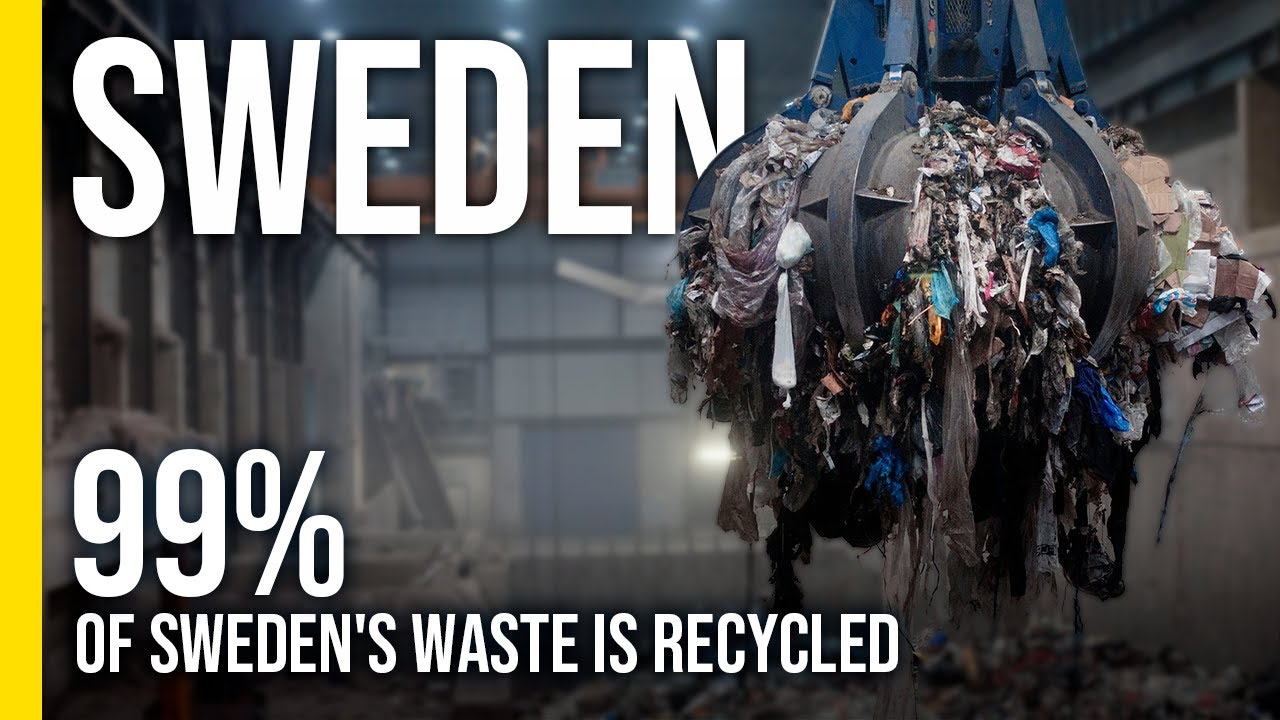
No discussion of Sweden’s waste transformation would prove complete without examining the cultural dimensions that enable technical systems to function. Swedish households demonstrate extraordinary compliance with complex sorting requirements. National surveys indicate that 99 percent of Swedish households regularly separate their waste, a participation rate that politicians in other nations can only imagine.
This cultural achievement stems from deliberate policy design rather than inherent national character. Municipalities provide color-coded bins with clear pictorial instructions. Apartment buildings feature convenient recycling rooms rather than requiring residents to transport materials elsewhere. Deposit return systems for beverage containers offer immediate cash redemption at grocery stores, creating tangible rewards for proper disposal.
Children receive environmental education beginning in preschool, visiting recycling centers and participating in waste-free lunch programs. The national curriculum embeds sustainability concepts across subjects, ensuring that environmental responsibility becomes second nature rather than political imposition. A seven-year-old Stockholm resident can explain why yogurt containers require rinsing before recycling while their grandparents remember when everything went into the same hole in the ground.
Producer Responsibility: Making Manufacturers Accountable
Sweden pioneered extended producer responsibility policies that require manufacturers to finance collection and recycling systems for their products. This principle, now embedded throughout European Union legislation, originated in Swedish environmental law during the 1990s.
Under these frameworks, producers of packaging, newspapers, tires, batteries, electrical equipment, and vehicles must ensure that their products do not burden taxpayers upon becoming waste. This policy creates powerful economic incentives for design changes. When automakers bear end-of-life vehicle costs, they develop cars with fewer materials, more recyclable components, and easier disassembly. When electronics manufacturers finance e-waste processing, they reduce hazardous substances and design modular products with separable valuable materials.
The results manifest in continuously improving recycling rates and product designs. Swedish-produced packaging has become thinner without sacrificing strength. Electronics contain fewer glued assemblies and more standardized fasteners. Vehicle manufacturers compete to declare the highest recyclable content percentages.
Biological Treatment: Completing Natural Cycles
While waste-to-energy captures public imagination, Sweden’s biological treatment systems deserve equal attention. Approximately 17 percent of Swedish household waste undergoes composting or anaerobic digestion. The latter process produces both biogas for vehicle fuel and nutrient-rich digestate for agricultural fertilizer.
Swedish municipalities increasingly separate food waste at source using brown paper bags distributed specifically for kitchen organics. Optical sorting equipment distinguishes these bags from other waste streams, enabling efficient separation without requiring residents to handle multiple bins. The resulting biogas powers hundreds of public transit vehicles, while the residual digestate returns essential nutrients to farmland.
This biological loop embodies circular economy principles more completely than any energy recovery system. Carbon returns to soil rather than atmosphere. Finite phosphorus resources receive conservation through recovery. Fossil fuel displacement occurs both through biogas substitution and through reduced synthetic fertilizer production.
Gothenburg’s GoBiGas facility represented the technological frontier until its recent decommissioning—producing biomethane through thermal gasification of forest residues and waste wood. Though economic challenges led to closure, the project demonstrated Sweden’s willingness to pioneer advanced technologies before commercial viability emerges.
Economic Dimensions: The Numbers Behind the Narrative
Sweden’s waste sector generates approximately 10 billion Swedish kronor annually in revenue, employing thousands of workers across collection, sorting, processing, research, and equipment manufacturing. Domestic waste management costs remain lower than comparable European nations due to scale efficiencies and energy recovery revenues.
The import-export balance proves particularly striking. Norway pays Sweden approximately 3,000 kronor per ton for waste treatment, while Sweden sells the resulting energy domestically. This arrangement represents environmental services export comparable to consulting engineering or telecommunications.
Swedish waste technology companies have become significant exporters themselves. Firms like Mälarenergi, Tekniska Verken, and Renova license their expertise globally, designing waste treatment facilities from London to Shanghai. The intellectual property developed through decades of domestic optimization now generates substantial foreign revenue.
Remaining Challenges and Continuous Improvement
Despite extraordinary achievements, Sweden’s waste system continues evolving to address persistent challenges. Plastic recycling remains problematic, with contamination limiting closed-loop applications. Most recovered plastic undergoes downcycling into lower-grade products rather than true circularity. Lightweight packaging films and multilayered materials still challenge existing sorting technologies.
Fashion and textile waste present similar difficulties. While collection systems capture increasing volumes, mechanical recycling technologies cannot yet transform blended fabrics into virgin-quality fibers. Swedish researchers collaborate with international partners on chemical recycling innovations, but commercial implementation remains years distant.
Construction and demolition debris constitutes approximately one-third of Sweden’s non-hazardous waste stream. While recovery rates exceed 50 percent, high-purity applications for recycled aggregates and gypsum require further development. The Swedish Construction Federation has launched voluntary certification systems, but regulatory mandates may prove necessary for full circularity.
Food waste reduction targets continue ratcheting upward. Current policy aims for 50 percent reduction by 2025 compared to 2015 baseline. Retailers and restaurants have implemented technological solutions including dynamic pricing for near-expiry items and predictive ordering algorithms, but household behavior modification proceeds slowly.
International Lessons: What Others Can Learn
Sweden’s experience offers valuable guidance for nations at earlier stages of waste infrastructure development. Several transferable principles emerge from four decades of continuous improvement.
First, long-term policy stability enables private sector investment confidence. Swedish waste policies evolved gradually with broad cross-party consensus rather than reversing with each election cycle. This predictability allowed companies to finance capital-intensive facilities requiring twenty-year payback periods.
Second, economic instruments outperform command-and-control regulation. Landfill taxes, incineration taxes (later repealed), weight-based collection fees, and deposit refunds created financial motivations complementing environmental values. Swedish households respond to incentives, not merely appeals to conscience.
Third, infrastructure precedes behavior. Convenient collection systems generate higher participation rates than distant drop-off centers regardless of environmental awareness. Swedish municipalities invested heavily in accessibility before launching public awareness campaigns.
Fourth, measurement enables management. Sweden maintains comprehensive waste accounting with standardized categories and methodologies. This data infrastructure supports evidence-based policy adjustments and performance benchmarking across municipalities.
Fifth, no nation succeeds alone. Sweden’s willingness to import waste and export technology reflects understanding that environmental challenges transcend borders. The country participates actively in international standard-setting and knowledge sharing rather than hoarding its innovations.
The Philosophical Dimension: Waste as Design Failure
Perhaps Sweden’s most profound contribution involves reframing waste fundamentally. Rather than accepting discards as inevitable consequences of consumption, Swedish policy increasingly treats waste as evidence of design failure. If products cannot be repaired, reused, or recycled, the deficiency lies not with consumers but with designers.
This perspective shift manifests in emerging policy proposals. Ecodesign requirements increasingly mandate repairability, spare parts availability, and material transparency. Proposed tax adjustments would favor repair services over new products. Municipal libraries now lend tools and appliances rather than requiring individual ownership.
These developments suggest that Sweden’s waste transformation remains incomplete. The current system excels at managing discards elegantly, but the ultimate aspiration involves eliminating discards entirely. True circularity requires not better incinerators but better products—and ultimately, reconsideration of consumption itself.
Conclusion: The Road Ahead
Sweden’s trash-to-cash system represents one of the twenty-first century’s most impressive environmental achievements. Through persistent, methodical effort spanning generations, the nation has nearly eliminated landfilling while generating economic value, energy security, and employment opportunities from materials previously considered worthless.
Yet Swedish waste professionals remain characteristically modest about their accomplishments. They readily acknowledge remaining gaps and emerging challenges. They express no satisfaction with current performance but instead pursue continuous improvement with typical Scandinavian determination.
For observers elsewhere, Sweden’s example demonstrates that waste crises are solvable. The path requires neither heroic individual sacrifice nor draconian state compulsion. It demands intelligent system design, consistent policy signals, appropriate technology deployment, and patient cultural cultivation. These ingredients remain available to any society willing to undertake the journey.
The ultimate lesson may transcend technical waste management. Sweden has demonstrated that environmental responsibility and economic prosperity need not conflict. By reimagining waste as resource, the nation has discovered that doing the right thing can also represent the profitable thing. In an era of tightening resource constraints and mounting environmental pressures, this insight may prove Sweden’s most valuable export.