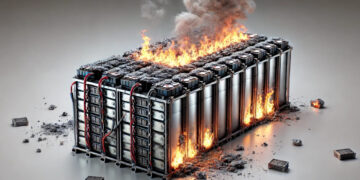
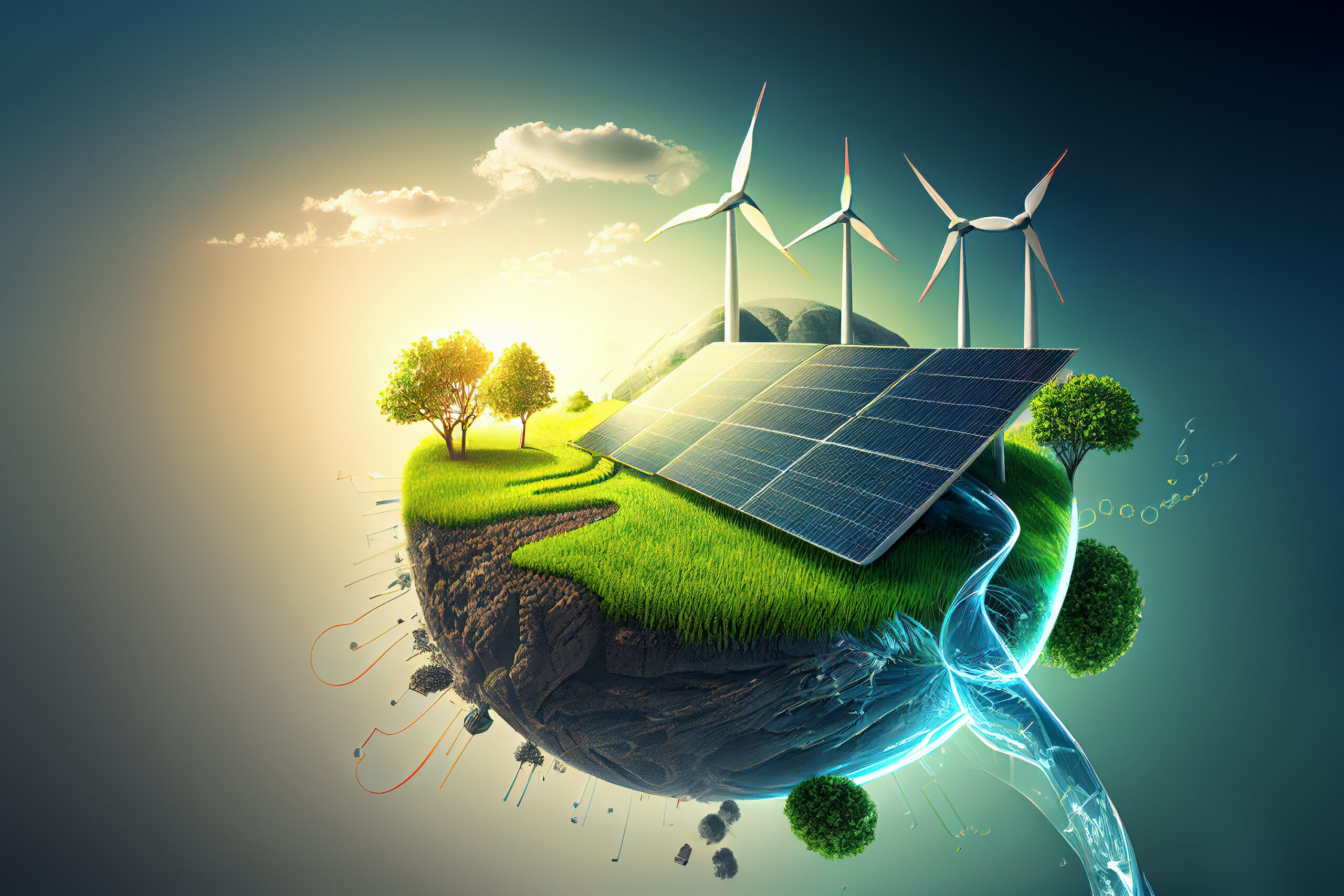
The global transition to renewable energy was once seen as the definitive solution to climate change and fossil fuel dependency. However, in recent years, a troubling reality has emerged: the green energy sector is facing a deepening crisis. Despite ambitious pledges, technological breakthroughs, and growing public support, the world is struggling to scale clean energy fast enough to meet climate targets. This article explores the multifaceted dimensions of the green energy crisis, analyzing its causes, consequences, and potential pathways forward.
Understanding the Green Energy Crisis
The term “green energy crisis” refers to the widening gap between renewable energy goals and actual implementation. While solar and wind power have experienced exponential growth, systemic barriers continue to hinder their ability to replace fossil fuels at the required pace. The crisis is not about resource depletion sunlight and wind remain abundant but rather about the economic, political, and infrastructural challenges that prevent their full utilization.
This crisis manifests in several critical areas: supply chain vulnerabilities, grid infrastructure inadequacy, investment imbalances, policy inconsistencies, and social resistance. Each of these factors compounds the others, creating a complex web of obstacles that threaten to derail the energy transition.
Supply Chain Disruptions and Material Scarcity
One of the most pressing dimensions of the green energy crisis involves supply chains. Renewable energy technologies depend heavily on specific raw materials whose availability is increasingly uncertain.
A. Critical Mineral Dependence: Solar panels require silver and silicon, wind turbines need neodymium and dysprosium for their magnets, and battery storage relies heavily on lithium, cobalt, and nickel. The geographic concentration of these resources creates significant risks. For instance, the Democratic Republic of Congo supplies over 70 percent of global cobalt, while China dominates rare earth element processing. This concentration mirrors the fossil fuel dependencies that renewables sought to escape.
B. Price Volatility: Between 2020 and 2023, lithium carbonate prices increased by more than 600 percent before partially retreating. Such extreme fluctuations make long-term planning difficult for manufacturers and project developers. The resulting cost instability has delayed or cancelled numerous renewable energy projects worldwide.
C. Manufacturing Bottlenecks: Even when raw materials are available, manufacturing capacity remains constrained. The global capacity for producing electrolyzers for green hydrogen, high-voltage direct current cables, and specialized semiconductor components for power electronics all fall short of projected demand for 2030.
Grid Infrastructure: The Invisible Barrier
Perhaps the most underestimated aspect of the green energy crisis is the inadequacy of electrical grids. Modern grids were designed for centralized, predictable power generation, not for distributed, variable renewable sources.
A. Connection Queue Backlogs: In many developed nations, renewable energy projects face waiting periods of four to seven years just to connect to the grid. In the United States, over 1,400 gigawatts of generation and storage capacity were awaiting connection approvals at the end of 2023 more than triple the entire existing US generating fleet.
B. Transmission Deficits: The best renewable resources are often located far from population centers. Offshore wind farms, desert solar installations, and remote hydroelectric projects require extensive transmission corridors that face permitting delays, land acquisition challenges, and public opposition.
C. Grid Modernization Costs: Upgrading grids to handle bidirectional power flows, accommodate distributed generation, and maintain stability with high renewable penetration requires investments estimated at over $20 trillion globally by 2050. Current investment levels are substantially below this requirement.
The Investment Paradox
Financial resources for green energy have never been more abundant, yet they are not flowing to where they are most needed. This creates a paradoxical situation where capital exists but fails to address the crisis effectively.
A. Geographic Imbalances: Over 80 percent of global clean energy investment in recent years has been concentrated in China, Europe, and North America. Emerging markets and developing economies, despite having abundant renewable resources and urgent energy needs, receive only a fraction of this capital. Africa, home to 60 percent of the world’s best solar resources, attracts less than 2 percent of global clean energy investment.
B. Sectoral Disparities: Investment heavily favors established technologies like solar and wind, while critical enabling technologies receive inadequate funding. Long-duration energy storage, advanced nuclear, carbon capture, and green hydrogen production remain significantly undercapitalized relative to their potential importance.
C. Risk Perception: Private capital requires risk-adjusted returns that many green energy projects in developing countries cannot offer due to currency risks, off-taker creditworthiness concerns, and regulatory uncertainty. Multilateral development banks and public finance institutions have not scaled their de-risking mechanisms sufficiently to bridge this gap.
 Policy Inconsistencies and Regulatory Hurdles
Government policies remain crucial drivers of the energy transition, but policy instability creates significant headwinds.
A. Retroactive Policy Changes: Several European nations have altered feed-in tariff schemes retroactively, undermining investor confidence. Spain’s solar tariff disputes, which led to international arbitration cases, remain a cautionary example for investors worldwide.
B. Permitting Complexity: A typical utility-scale solar project in the European Union requires permits from multiple agencies at local, regional, and national levels. The average permitting timeline exceeds four years, longer than the actual construction period.
C. Subsidy Competition: The United States Inflation Reduction Act and European Union Green Deal Industrial Plan have sparked a subsidy race that, while accelerating deployment in these regions, risks diverting manufacturing capacity and talent away from the developing world.
Social Acceptance and Just Transition Concerns
The green energy transition faces growing social resistance that threatens deployment timelines.
A. Land Use Conflicts: Utility-scale solar and wind installations require substantial land areas, creating competition with agriculture, conservation, and indigenous territories. In Germany, citizen opposition has blocked multiple wind farm projects. In the United States, solar development on agricultural land faces increasing local restrictions.
B. Community Benefits: Too often, renewable energy projects are developed without meaningful community engagement or equitable benefit sharing. This creates perception of green colonialism, where local communities bear environmental and visual impacts while energy benefits flow to distant urban centers.
C. Workforce Transition: Fossil fuel workers face uncertain futures, and without robust just transition programs, they become natural constituencies opposing renewable development. Current retraining and economic diversification efforts remain insufficient to address the scale of the challenge.
Technological Gaps and Integration Challenges
While renewable electricity generation technologies are mature, the broader energy system presents unresolved technological challenges.
A. Seasonal Storage: Batteries address short-term variability but cannot cost-effectively manage seasonal supply-demand mismatches. Northern European countries face winter weeks with minimal solar output and reduced wind, requiring storage solutions that do not yet exist at commercial scale.
B. Hard-to-Abate Sectors: Industry, heavy transport, and aviation account for approximately 30 percent of global emissions but lack mature clean energy alternatives. Green steel, sustainable aviation fuels, and zero-emission maritime shipping remain expensive and unproven at scale.
C. Digitalization Vulnerabilities: Modern energy systems depend increasingly on digital technologies for management and optimization. This creates new cybersecurity vulnerabilities that, if exploited, could disrupt power supplies and erode public confidence in renewable systems.
Climate Impacts on Renewable Generation
Ironically, climate change itself threatens renewable energy infrastructure.
A. Resource Variability: Changing weather patterns affect renewable resource availability. Decreasing wind speeds in some regions, known as global terrestrial stilling, has reduced wind farm productivity. Increased cloud cover in certain areas affects solar generation.
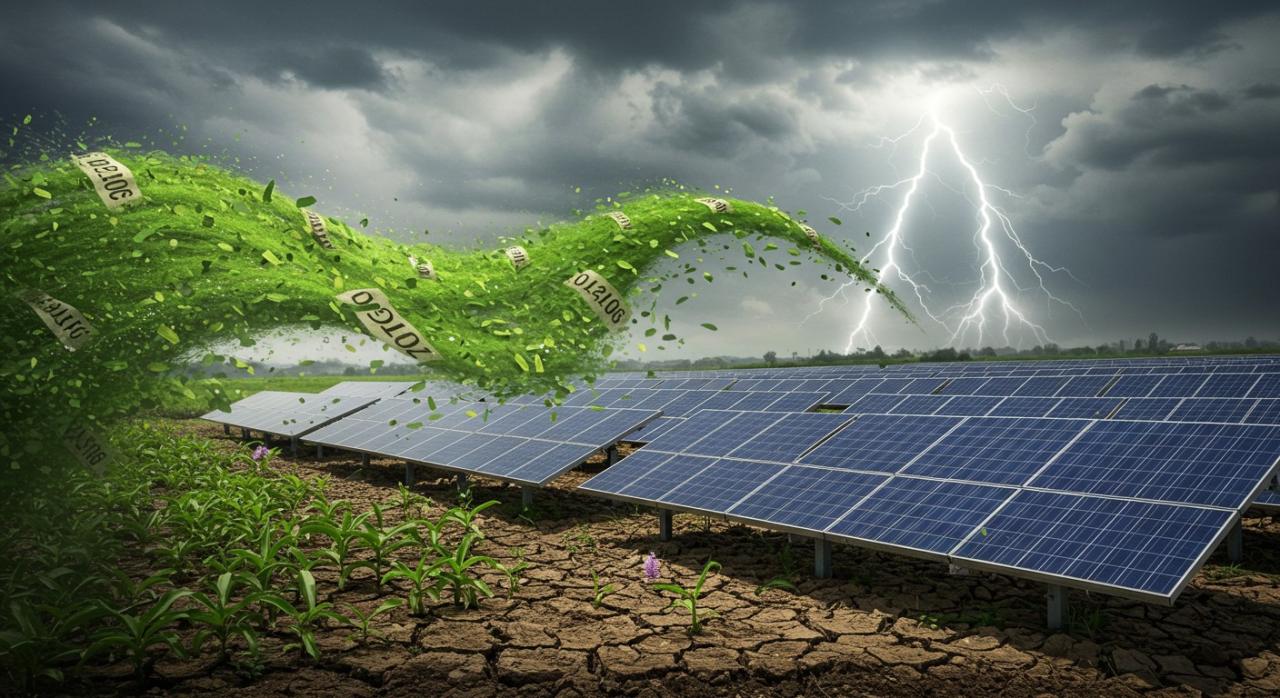
B. Extreme Weather Vulnerability: Solar farms are damaged by hailstorms, wind turbines by hurricanes, and grid infrastructure by wildfires and floods. These risks are increasing with climate change, raising insurance costs and threatening project viability.
C. Performance Degradation: Higher ambient temperatures reduce solar panel efficiency. For each degree Celsius of temperature increase, crystalline silicon solar panels lose approximately 0.4 to 0.5 percent of their output.
Strategies for Resolving the Green Energy Crisis
Addressing this multifaceted crisis requires coordinated action across multiple fronts simultaneously.
A. Supply Chain Resilience: Nations must diversify critical mineral sources, invest in recycling infrastructure to create urban mines, and accelerate research into material substitution. The European Union’s Critical Raw Materials Act and US Department of Energy minerals security collaborations represent initial steps in this direction.
B. Grid Transformation: Grid planning must shift from reactive to proactive approaches, anticipating renewable deployment rather than responding to connection requests. Regional transmission organizations should adopt scenario-based planning, pre-identify transmission corridors, and implement cost allocation mechanisms that recognize broad societal benefits.
C. Investment Rebalancing: Multilateral development banks must triple their climate finance commitments and deploy them strategically to crowd-in private capital. Currency hedging facilities, political risk insurance, and credit enhancement mechanisms can transform investment risk profiles in emerging markets.
D. Policy Stability: Governments should adopt climate laws that create long-term investment visibility, independent of electoral cycles. The United Kingdom’s Climate Change Act, which legally binds successive governments to carbon budgets, provides a useful model. Permitting reform should establish clear timelines and single-window clearance mechanisms.
E. Community-Centered Development: Project developers should adopt benefit-sharing models including community ownership stakes, local hiring preferences, and revenue sharing. Several successful models exist in Denmark, Germany, and parts of Canada that could be adapted globally.
F. Technology Portfolio Diversification: Over-reliance on solar and wind must give way to more diverse technology portfolios including geothermal, advanced nuclear, tidal, and concentrated solar power with thermal storage. Each technology offers different temporal and geographic characteristics that collectively enhance system resilience.
G. International Cooperation: The green energy crisis cannot be solved through national approaches alone. Technology transfer mechanisms, common standards for green products, coordinated strategic stockpiles of critical minerals, and shared research funding for pre-commercial technologies all require enhanced international collaboration.
 The Road Ahead
The green energy crisis represents not a failure of renewable energy but rather the growing pains of a fundamental economic transformation. The transition from fossil fuels to clean energy is the largest industrial transformation in human history, comparable to the shift from biomass to coal during the Industrial Revolution or from horses to automobiles.
The crisis dimensions outlined above should not obscure the remarkable progress achieved. Renewable energy now represents the cheapest source of new electricity generation in most of the world. Electric vehicle sales continue their exponential growth trajectory. Public awareness and political commitment to climate action have never been higher.
Yet progress remains too slow. The International Energy Agency projects that current policies and deployment rates will achieve only 20 percent of the emissions reductions needed by 2030 to keep the 1.5-degree Celsius pathway within reach. This gap between ambition and implementation defines the green energy crisis.
Resolving this crisis requires recognizing that technological readiness alone does not guarantee transformation. The barriers are primarily institutional, financial, and political. Overcoming them demands the same creativity, determination, and collaborative spirit that produced the technological breakthroughs now awaiting full deployment.
The coming decade will determine whether the green energy crisis becomes a temporary obstacle on the path to sustainability or a permanent condition that locks in catastrophic climate change. The choice remains ours to make, but the window for making it closes rapidly with each passing year of inadequate action.