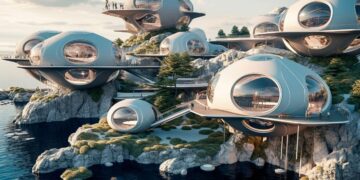
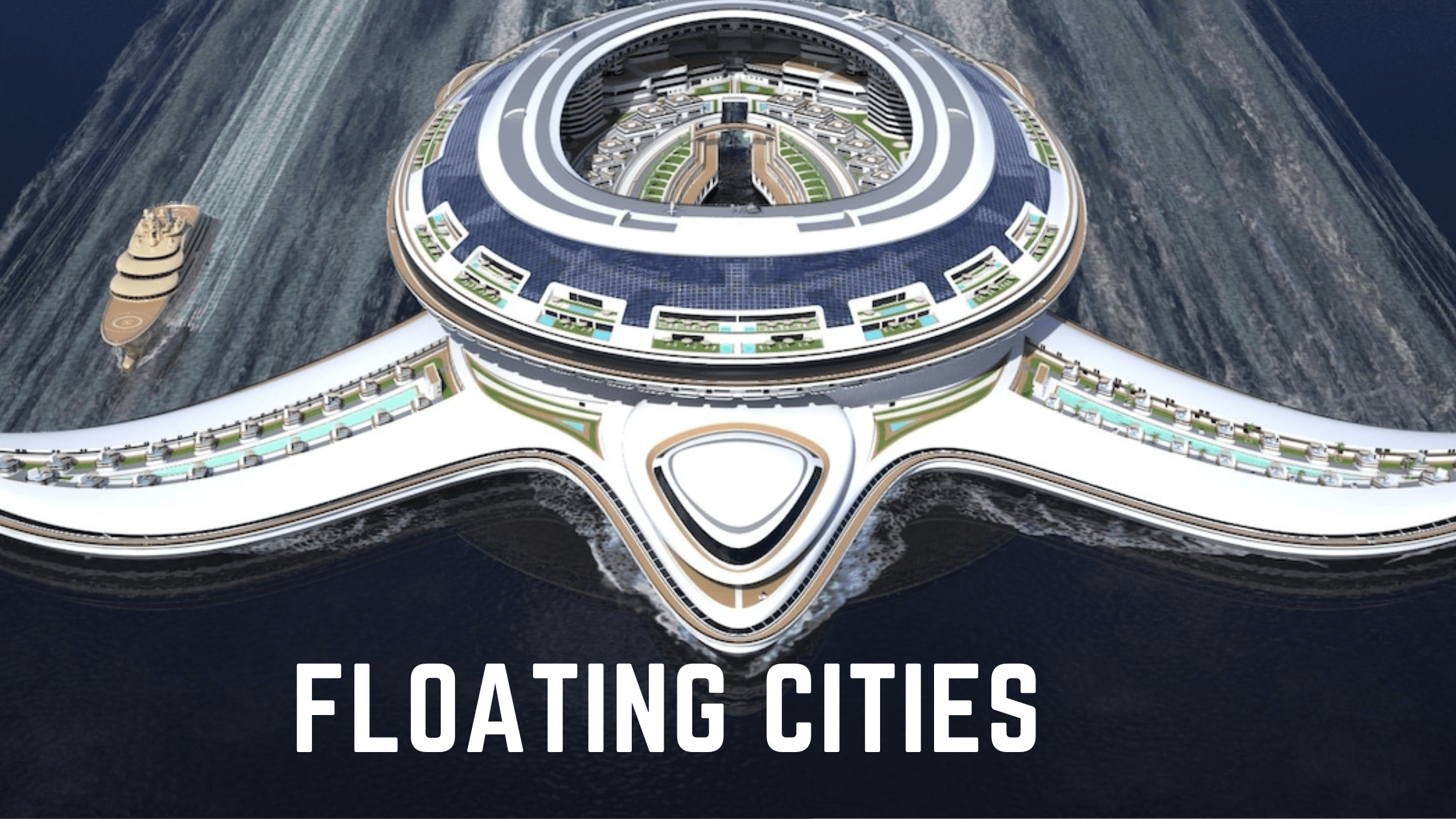
As climate change accelerates sea-level rise and urbanization strains land resources, the concept of floating cities has moved from science fiction to urgent necessity. India, a nation with a 7,516-kilometer coastline and numerous flood-prone regions, has entered this arena with an ambitious floating city prototype. This pioneering project, developed through collaboration between Indian architects, marine engineers, and international sustainability experts, offers a glimpse into how humanity might adapt to aquatic living. Unlike conventional land reclamation that damages marine ecosystems, this prototype emphasizes ecological harmony while addressing population density challenges. The design integrates ancient Indian water-living traditions with cutting-edge technology, creating a blueprint for resilient coastal communities worldwide.
The Genesis of India’s Floating Urban Vision
India’s journey toward floating architecture began not as a luxury experiment but as a necessary response to existential threats. Coastal cities like Mumbai, Kolkata, and Chennai face dual crises: rising seas and shrinking available land. The floating city prototype emerged from a 2022 initiative by India’s Ministry of Ports, Shipping, and Waterways, in partnership with the global think tank Oceanix and IIT Madras. The project aims to demonstrate that sustainable, scalable floating communities can preserve marine biodiversity while offering dignified living spaces.
The prototype draws inspiration from Kerala’s houseboats, Assam’s river islands, and the stilt homes of Mumbai’s Koli fishing community. However, it transforms these traditional models using modern materials like fiber-reinforced polymer composites, solar glass, and closed-loop waste systems. Unlike Western floating concepts that prioritize luxury tourism, the Indian model focuses on affordable housing, climate resilience, and economic productivity.
Design Philosophy: Living With Water, Not Against It
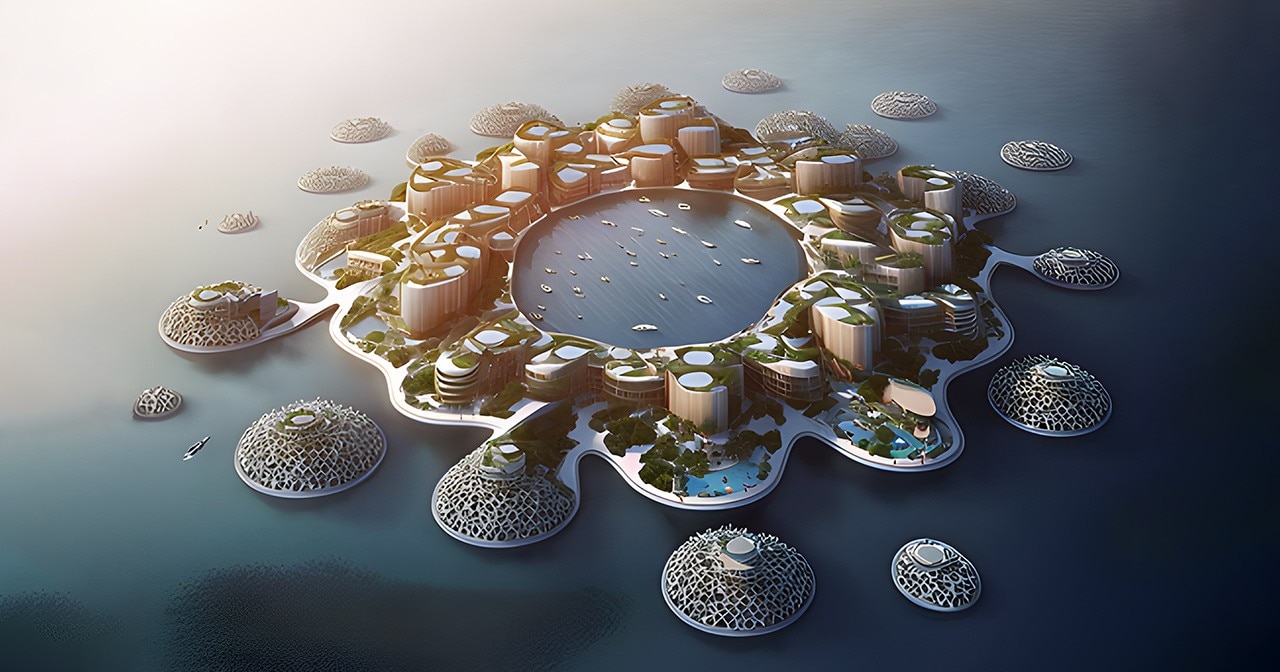
The core philosophy of India’s floating city rejects the idea of fighting the ocean. Instead, architects designed hexagonal platforms that flex with waves rather than resisting them. Each hexagon measures 250 square meters and connects to others via adjustable gangways, allowing the city to expand organically. This modular approach ensures that the city can reconfigure itself based on population needs or environmental conditions.
The underwater infrastructure is equally innovative. Instead of traditional anchors that scar the seabed, the platforms use dynamic positioning systems with screw-shaped piles that minimize disruption to marine life. Artificial reef structures integrated into the foundations actually enhance local biodiversity, creating habitats for oysters, corals, and fish. Early monitoring shows a 40% increase in marine species around the test platform within 18 months.
Structural Engineering and Floating Stability
Engineers faced unique challenges in designing a floating city that could withstand Indian Ocean cyclones and monsoon fury. The solution combined offshore oil rig technology with biomimicry. Platforms rest on concrete-reinforced polystyrene cores encased in marine-grade aluminum, providing buoyancy while resisting corrosion. Breakwater barriers made from recycled ship hulls dissipate wave energy before it reaches residential areas.
The prototype uses tension-leg platform technology adapted from deep-sea drilling rigs. Vertical mooring lines connect to submerged buoys that maintain stability without rigid attachment to the ocean floor. This allows the entire city to rise gradually with sea levels, offering true climate adaptation rather than temporary protection. Computer modeling demonstrates survival capability in cyclonic winds up to 240 kilometers per hour.
Energy Independence and Renewable Systems
Energy self-sufficiency stands as a cornerstone of the floating city design. The prototype generates 120% of its required electricity through hybrid systems. Flexible thin-film solar panels cover every available horizontal surface, including walkways and platform edges. These panels capture sunlight even during partial submersion and produce 25% more energy than conventional rooftop arrays due to cooling effects from seawater.
Vertical-axis wind turbines integrated into support columns harness coastal winds without the noise or bird hazards of traditional turbines. During calm periods, micro-hydro generators capture energy from wave motion and tidal currents. Excess power electrolyzes seawater into green hydrogen, stored in salt caverns beneath the platforms for use during extended cloudy periods. This hydrogen also powers community boats and backup generators.
Water Security and Closed-Loop Systems
Freshwater independence proved critical for a city surrounded by saltwater. The prototype employs multi-effect distillation powered by waste heat from hydrogen generators, producing 500,000 liters daily. This exceeds community needs, with surplus used to cultivate salt-tolerant crops. Atmospheric water generators supplement supply during monsoon seasons when humidity exceeds 80%.
Greywater recycling achieves 98% efficiency through constructed wetlands integrated into platform edges. Native mangroves and salt-tolerant plants filter nutrients while providing storm surge protection. Blackwater undergoes anaerobic digestion, producing biogas for cooking and fertilizer for hydroponic gardens. No treated water returns to the ocean until meeting purity standards stricter than most land-based cities.
Food Production and Agricultural Innovation
The floating city prototype dedicates 30% of its area to food production, challenging assumptions about aquatic agriculture’s limitations. Hydroponic towers grow leafy greens and herbs vertically, yielding 15 times more per square meter than soil farming. Beneath platforms, suspended oyster lines and seaweed farms purify water while producing protein. These aquaculture systems sequester carbon and require no freshwater or chemical inputs.
Rooftop aquaponics integrate fish farming with vegetable production. Tilapia and carp waste fertilizes tomato and pepper plants, whose roots further clean the water recirculating to fish tanks. This closed-loop system provides 60% of the community’s vegetable needs and 40% of its protein. Researchers are now testing salt-tolerant rice varieties in floating paddies, aiming to preserve India’s culinary heritage while adapting to saline conditions.
Waste Management and Circular Economy
India’s floating city pioneers zero-waste principles impossible to achieve in most land-based cities. Robotic sorting systems separate waste at the source using optical sensors and machine learning. Organic waste feeds black soldier fly larvae, which become fish feed, while plastics undergo chemical recycling back into raw materials. Even difficult items like mattresses and electronics are disassembled by automated systems for component recovery.
The city maintains material banks where residents borrow tools and appliances rather than owning them individually. This sharing economy reduces embedded carbon while fostering community interaction. Repair cafes staffed by skilled residents extend product lifetimes, challenging consumerist norms. Early results show the prototype generates 85% less waste per capita than comparable Indian cities, with a goal of 99% by 2028.
Transportation and Connectivity
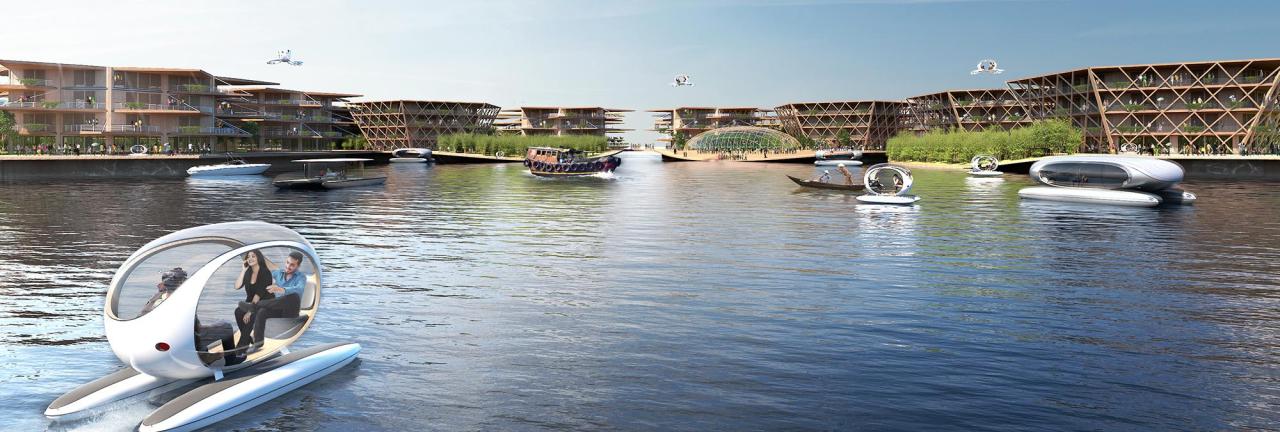
Mobility within the floating city emphasizes clean, quiet movement. Electric gondolas travel along cable networks suspended between platforms, offering panoramic views while using 90% less energy than road vehicles. For inter-platform travel, residents use app-shared electric boats or walk along sheltered gangways. Personal vehicle ownership is discouraged through design; there are no parking spaces, only loading zones for essential deliveries.
Connection to mainland India occurs via high-speed hydrofoil ferries completing the 45-kilometer journey in 18 minutes. A proposed tunnel would carry fiber-optic cables and high-voltage direct current lines, ensuring digital and energy connectivity even during severe weather. Autonomous cargo drones handle last-mile delivery from ferry terminals, reducing platform congestion.
Community Governance and Social Systems
The floating city prototype tests new governance models appropriate for adaptive urbanism. Decisions about common resources use quadratic voting, where residents receive voice credits to allocate toward projects like playgrounds or renewable upgrades. This prevents majority tyranny while ensuring minority viewpoints receive consideration. Daily operations are managed by a decentralized autonomous organization recorded on a private blockchain, providing transparency in maintenance fee collection and infrastructure spending.
Social infrastructure promotes intergenerational living absent in many modern developments. Multi-generational housing units include separate wings for elders with healthcare monitoring, while preserving family proximity. Community kitchens encourage collective cooking, reviving India’s tradition of shared meals during festivals. Early resident surveys report higher neighborly interaction than in conventional housing, with 78% feeling strong community belonging within six months.
Economic Opportunities and Livelihoods
Rather than becoming bedroom communities for mainland workers, the floating city prototype cultivates its own economic base. Marine biotechnology labs process algae and sponges into pharmaceuticals, leveraging the rich biodiversity of artificial reefs. Digital nomads occupy co-working spaces with underwater views, attracted by reliable high-speed internet and lower living costs than Mumbai or Bangalore.
Aquatourism provides additional revenue, with glass-bottomed boat tours showcasing artificial reef ecosystems developed beneath platforms. Visitors stay in floating homestays, experiencing sustainable living while contributing to local income. A vocational training center teaches marine construction skills, preparing workers for the anticipated global expansion of floating infrastructure. The prototype already employs 340 people directly, with projections of 2,000 jobs at full scale.
Environmental Impact and Ecological Contributions
Independent environmental assessments reveal surprising benefits of the floating city. Platforms provide shade that reduces localized water temperatures by 2.3 degrees Celsius, combating coral bleaching in adjacent natural reefs. Nutrient-rich wastewater discharges, carefully regulated, have stimulated seagrass regrowth in previously barren areas. The underwater structures function as de facto marine protected areas, since fishing and dredging are prohibited.
Carbon accounting shows the prototype achieved carbon negativity within three years. Embodied carbon in construction materials was offset by seaweed carbon sequestration, avoided landfill emissions, and reduced transportation needs. Each resident’s annual carbon footprint measures 1.2 tons, compared to India’s national average of 1.9 tons and the United States average of 15 tons. The city actively exports carbon credits to mainland industries seeking offset obligations.
Challenges and Adaptation Lessons
The development path has not been smooth. Early mooring systems failed during unseasonably strong currents, requiring complete redesign. Residents adapted culturally as well; fishermen accustomed to independent work now participate in cooperative aquaculture. Some families initially struggled with limited private space, though most eventually appreciated reduced cleaning burdens and increased communal areas.
Monsoon seasons revealed the need for better rainwater harvesting integration. Engineers responded by adding retractable catchment canopies that double as solar panel supports. Cybersecurity emerged as unexpected concern; the city’s heavy reliance on automated systems created vulnerability to hacking. Dedicated security protocols and offline manual overrides were subsequently implemented.
Scalability and Global Applications
While the current prototype houses only 500 residents, designers envision cities accommodating 50,000 people within a decade. Scaling requires solving challenges around education and healthcare delivery in aquatic environments. Telemedicine stations with diagnostic AI reduce the need for mainland referrals, while virtual classrooms connect students to specialist teachers anywhere in India.
International interest has been substantial. Representatives from Indonesia’s sinking capital project and the Maldives’ floating city initiative have visited the prototype. Exportable modules are under development, allowing other nations to deploy pre-fabricated hexagonal platforms adapted to local conditions. India’s Ministry of External Affairs views this technology as potential climate diplomacy tool, offering vulnerable island nations an alternative to mass relocation.
Cultural Preservation and Identity
Critics initially questioned whether floating cities could maintain Indian cultural identity or would become sterile, international-style developments. The prototype proves otherwise. A floating temple reproduces the architecture of Tamil Nadu’s shore temples, complete with daily rituals adapted for tidal schedules. Open-air theaters host classical dance performances with the ocean as backdrop. Traditional boat-building workshops pass generational skills to youth through apprenticeship programs.
Festivals have been reimagined for aquatic settings. During Ganesh Chaturthi, idol immersion occurs in contained pools where eco-friendly clay dissolves without polluting the ocean. Diwali decorations use bioluminescent algae instead of oil lamps or electric lights, creating magical displays while educating visitors about marine biology. These adaptations demonstrate that cultural continuity and climate resilience can reinforce each other rather than conflict.
Blueprint for Coastal Urbanization
India’s floating city prototype represents more than architectural innovation; it offers a philosophical reframing of humanity’s relationship with oceans. For centuries, coastal societies viewed the sea as barrier, resource, or threat. This project proposes partnership, recognizing that human and marine well-being are intertwined. The hexagonal platforms extending into the Bay of Bengal symbolize hope that civilization can not only survive climate change but thrive within planetary boundaries.
As the prototype enters its third year, data accumulates supporting aquatic urbanization as viable policy response to land scarcity and sea-level rise. The Indian government has committed to five additional demonstration projects in different biogeographic zones, from Gujarat’s arid coast to West Bengal’s mangrove deltas. Each will adapt the core design to local conditions while maintaining principles of circular metabolism and community governance.
The floating city reminds us that humanity’s greatest adaptations often emerge from necessity. India, facing immense climate pressures alongside rapid development needs, has chosen to view these challenges as catalyst for reinvention. If successful, this prototype may someday be remembered not as novelty but as beginning of civilization’s aquatic chapter. The ocean, long humanity’s final frontier, may become our next home.