In recent years, Japan has consistently positioned itself at the forefront of technological innovation. From bullet trains to humanoid robots, the country’s ability to merge tradition with futuristic vision is globally admired. One of the most ambitious examples of this technological push was the Henn-na Hotel, commonly referred to as the “Robot Hotel,” located in Nagasaki and later expanded to Tokyo. Initially celebrated by Guinness World Records as the world’s first hotel staffed by robots, it was meant to be a shining beacon of efficiency, novelty, and cost-saving automation. However, the dream quickly soured. What was once heralded as the future of hospitality has now become a cautionary tale about over-automation, poor user experience, and technological hubris.
This article explores the rise and fall of Japan’s Robot Hotel, analyzing the reasons behind its failure, the lessons learned, and the broader implications for the global hospitality and tech industries.
The Vision Behind the Robot Hotel
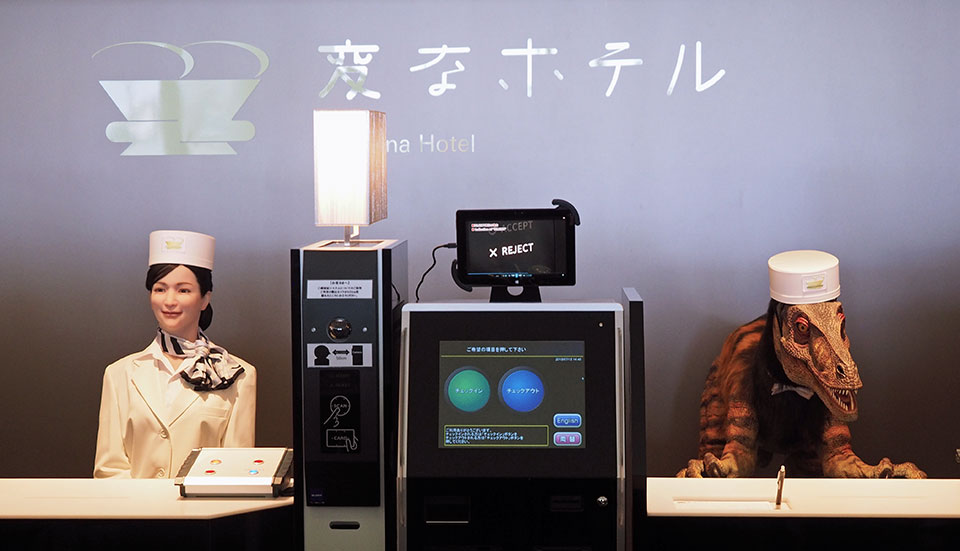
The Henn-na Hotel opened its doors in 2015 at Huis Ten Bosch, a theme park in Sasebo, Nagasaki. Its name, “Henn-na,” translates to “strange” or “peculiar” in Japanese a fitting title for a property that featured dinosaurs at the reception desk, humanoid robots carrying luggage, and AI-powered concierges. The goal was simple: create a hotel that was 90% automated, reduce labor costs, and offer guests a truly unique experience.
The hotel was not merely a marketing gimmick. It was backed by real investment in robotics and artificial intelligence, developed in collaboration with major Japanese tech companies. The robots were designed to perform multiple tasks: checking guests in and out, answering questions, storing luggage, and even providing wake-up calls. The hotel also utilized facial recognition technology instead of traditional room keys, aiming for a seamless and contact-free stay.
At the time, the hotel received massive international media attention. It seemed to promise a glimpse of a future where robots and humans coexisted harmoniously in service industries. However, beneath the glossy surface, operational flaws were already beginning to emerge.
The Breakdown: Why Japan’s Robot Hotel Failed
Despite its initial success and novelty appeal, the Henn-na Hotel began receiving widespread criticism from guests and staff alike. The problems ranged from minor inconveniences to major functional failures. Below is a detailed breakdown of the key reasons behind the hotel’s gradual dismantling of its robotic workforce.
A. Limited Functionality of Robots
One of the most significant issues was that the robots simply could not perform their jobs reliably. While they looked impressive and futuristic, their practical utility was severely limited.
-
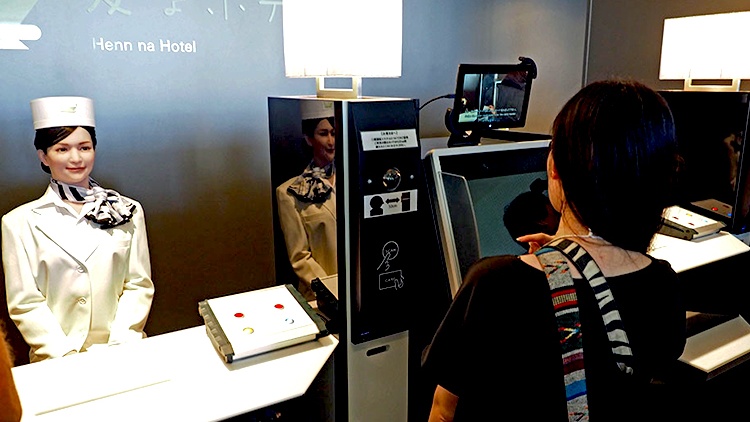
The Dinosaur Receptionists: Perhaps the most iconic robots at the hotel were the dinosaur-shaped receptionists. While they captured guests’ attention, they could only perform basic check-in tasks. They were unable to scan passports, answer complex questions, or resolve issues. In many cases, human staff had to step in and complete the check-in process manually.
-
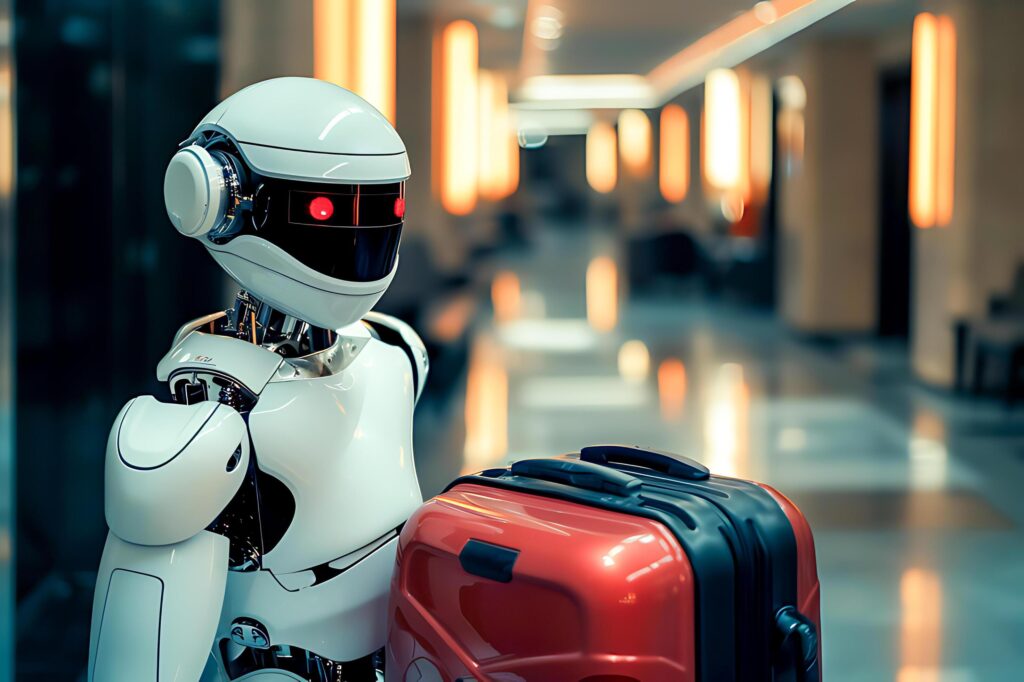
The Luggage-Carrying Robot: The hotel deployed autonomous robots to carry guests’ luggage to their rooms. However, these robots could only function on flat, indoor surfaces. They were incapable of navigating stairs, uneven terrain, or even crowded lobbies. Worse still, they often stopped working in rainy weather, as sensors would malfunction. Guests frequently had to carry their own bags.
-
In-Room Assistant “Churi”: Each room was equipped with a small, tulip-shaped robot named Churi, designed to answer basic questions about the hotel, weather, and nearby attractions. However, Churi could not answer even moderately complex queries. Simple questions like “What time is breakfast?” often received nonsensical or irrelevant responses, frustrating guests.
B. Outdated and Obsolete Technology
While the robots were cutting-edge at the time of the hotel’s opening, they quickly became outdated. Technology evolves at a breakneck pace, and within a few years, many of the robots were already obsolete. The operating systems were difficult to update, and replacing malfunctioning units was costly.
Additionally, the robots were not designed with scalability in mind. As the hotel expanded to other locations, replicating the same level of automation proved to be nearly impossible. Instead of improving the technology, management found themselves struggling just to maintain it.
C. Poor User Experience and Guest Complaints
The robots were intended to enhance the guest experience, but in many cases, they detracted from it. Numerous guests reported feeling frustrated, confused, or even ignored by the robotic staff.
-
Language Barriers: Many robots were programmed primarily in Japanese and had very limited English capabilities. Given that the hotel attracted international tourists, this created significant communication issues. Guests could not ask for directions, make special requests, or report problems effectively.
-
Noise Issues: Some robots produced constant humming or mechanical sounds that disturbed guests, especially at night. The in-room robots often activated unexpectedly, startling guests.
-
Unresolved Problems: When something went wrong such as a malfunctioning air conditioner or a broken lock guests had no immediate way to report the issue to a human. The robots were not equipped to handle such complaints, leading to long wait times and unresolved issues.
D. High Maintenance Costs
Ironically, the robots intended to save money actually ended up costing more than they saved. While the hotel reduced its human staff, it had to hire specialized technicians to maintain and repair the robots. These technicians were expensive and often had to be brought in from third-party vendors.
Moreover, the robots were not energy-efficient. Many operated 24/7, consuming significant amounts of electricity. When all costs were factored in purchase, installation, maintenance, energy, and eventual replacement the robotic workforce proved far more expensive than human employees.
E. Lack of Emotional Intelligence
Hospitality is fundamentally a human-centered industry. Guests expect warmth, empathy, and genuine interaction when they stay at a hotel. Robots, no matter how sophisticated, cannot replicate human emotions or provide personalized service.
A robot might greet a guest with a pre-recorded phrase, but it cannot detect sadness, excitement, or frustration. It cannot offer a comforting word to a tired traveler or remember a returning guest’s preferences. This lack of emotional intelligence was a major drawback, especially for a hotel that positioned itself as a premium experience.
F. Operational Inefficiencies
The automation system often created more work for human staff rather than reducing it. For example:
-
Instead of robots handling check-ins seamlessly, human employees frequently had to intervene.
-
The facial recognition key system often failed, requiring guests to be manually re-registered.
-
Room cleaning robots were slow and ineffective, leading to longer turnover times between guests.
Rather than streamlining operations, the technology introduced new layers of complexity and inefficiency.
The Gradual Dismantling of the Robot Staff
By 2019, the Henn-na Hotel had quietly begun replacing many of its robots with human workers. The dinosaur receptionists were removed or relegated to decorative roles. The luggage-carrying robots were decommissioned. Churi, the in-room assistant, was either removed or turned off in many rooms.
Management admitted that the initial goal of 90% automation was unrealistic. In interviews, hotel representatives acknowledged that robots were better suited for repetitive, simple tasks not complex, interactive roles that required human judgment and adaptability.
Today, the hotel still retains some automated elements, but the workforce is now predominantly human. The lesson learned was clear: automation is a tool, not a replacement for human connection.
Broader Lessons for the Hospitality and Tech Industries
The failure of Japan’s Robot Hotel offers several valuable insights for both the hospitality industry and the broader technology sector. These lessons extend far beyond one hotel and speak to the fundamental challenges of implementing automation in service-based industries.
A. Technology Must Serve People, Not the Other Way Around
One of the central mistakes of the Henn-na Hotel was prioritizing technological novelty over guest comfort. The robots were implemented because they were impressive, not because they solved a genuine problem. In the future, companies should focus on identifying specific pain points in the customer journey and using technology to address them not the reverse.
B. Hybrid Models Are More Sustainable
A fully automated hotel is neither practical nor desirable. The optimal model is a hybrid approach, where robots handle repetitive, low-touch tasks (such as carrying luggage or providing directions) while humans manage complex interactions and emotional labor. This balance maximizes efficiency without sacrificing service quality.
C. User Experience Must Be Central
No amount of technological sophistication can compensate for a poor user experience. If a robot confuses, frustrates, or delays a guest, it has failed its primary purpose. Designers must prioritize usability, accessibility, and reliability over flashy features.
D. Long-Term Costs Must Be Considered
Businesses often underestimate the total cost of ownership for robotic systems. Purchase price is only the beginning; maintenance, updates, energy, and eventual replacement can make automation far more expensive than traditional staffing. A thorough cost-benefit analysis is essential before implementation.
E. Emotional Intelligence Is Irreplaceable
In industries like hospitality, healthcare, and education, emotional intelligence is not a luxury it is a necessity. Robots can assist, but they cannot care. Companies must recognize the inherent value of human empathy and resist the temptation to automate it away.
The Future of Robotics in Hospitality
Despite the setbacks at Henn-na Hotel, robotics still have a promising future in hospitality. The key is to apply them wisely and humbly. Already, we are seeing successful examples of automation in hotels around the world:
-
Concierge chatbots that provide instant, accurate answers to common questions.
-
Automated check-in kiosks that work alongside human receptionists.
-
Robotic vacuum cleaners that clean floors autonomously without replacing housekeeping staff.
-
Smart room controls that allow guests to adjust lighting and temperature via voice or app.
These technologies succeed because they are designed to support human staff, not replace them. They are unobtrusive, reliable, and genuinely useful.
Japan’s Robot Hotel may have failed in its original vision, but it has provided the world with invaluable lessons. As we continue to explore the intersection of technology and hospitality, we must remember that the goal is not to build a hotel without people but to build a better hotel for people.
Conclusion
The story of Japan’s Robot Hotel is not one of complete failure, but of overreach and recalibration. It began as a bold experiment, fueled by national pride and corporate ambition. It captured the world’s imagination and sparked important conversations about the role of automation in daily life. In the end, however, it fell victim to its own ambition.
The hotel’s struggles remind us that technology is not a magic wand. It is a tool powerful, but limited. When wielded thoughtfully, it can enhance human capability and improve efficiency. When wielded carelessly, it can create frustration, waste resources, and alienate the very people it was meant to serve.
As the hospitality industry moves forward, it would do well to remember the strange hotel in Nagasaki. Not as a symbol of failure, but as a guidepost for what not to do and a reminder that in a world of machines, humanity is still our greatest asset.