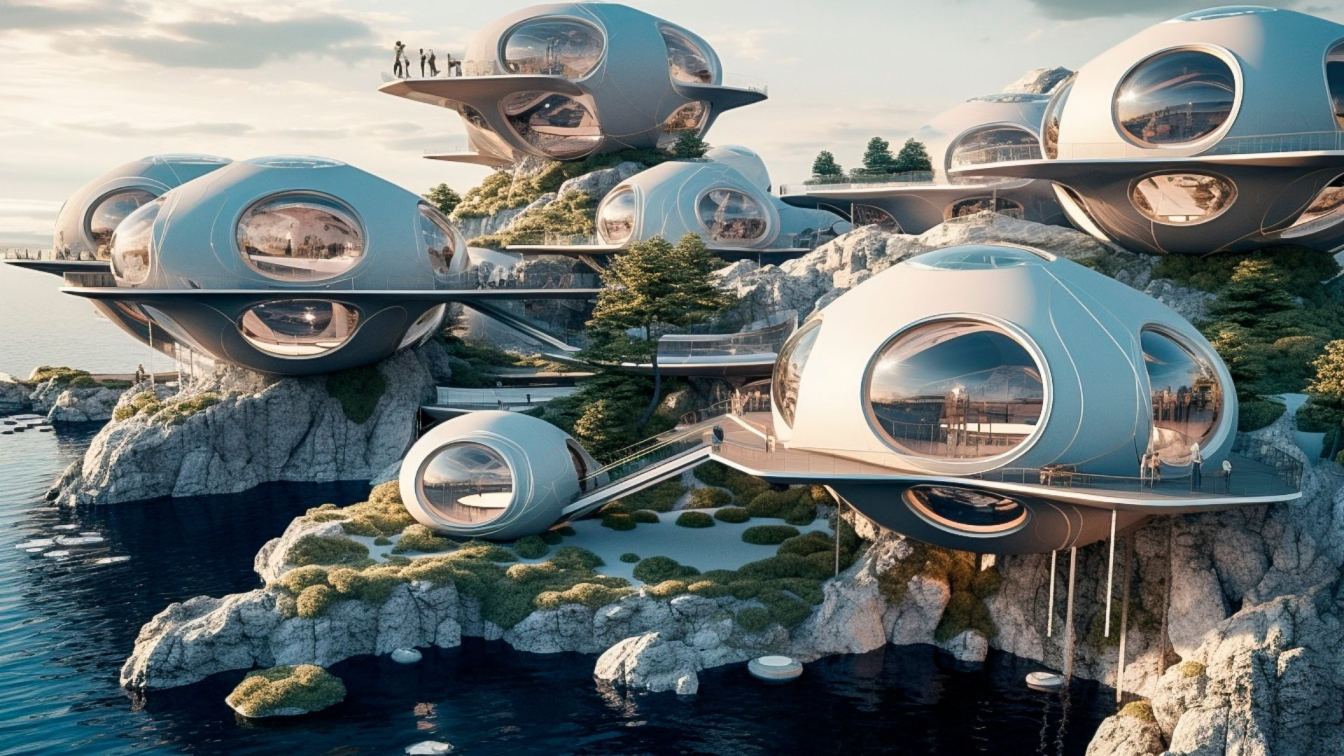
The concept of a home has remained relatively unchanged for centuries. Four walls, a roof, and a foundation have defined shelter since the dawn of civilization. However, this static understanding of housing is rapidly transforming. A new paradigm suggests that the future of residential architecture lies not in construction completed on a specific date, but in continuous, organic growth. The vision of future homes that grow themselves is shifting from science fiction into tangible possibility. This article explores the groundbreaking technologies, sustainable materials, and philosophical shifts driving this transformation.
The Evolution from Static Structures to Living Systems
For generations, the process of building a home has followed a linear trajectory. Architects design, contractors purchase materials, workers assemble components, and the finished product immediately begins a long, slow process of decay. Maintenance becomes a battle against entropy. This model is resource-intensive, wasteful, and fundamentally unsustainable.
The emerging alternative treats homes as living systems rather than finished products. Just as a forest does not appear overnight but develops through stages of growth, future residences will evolve from seed to maturity. These homes will repair themselves, adapt to their inhabitants, and eventually reintegrate with the environment at the end of their lifecycle. This shift from building to growing represents one of the most significant revolutions in human shelter since the Neolithic Revolution.
Mycelium: The Foundation of Living Architecture
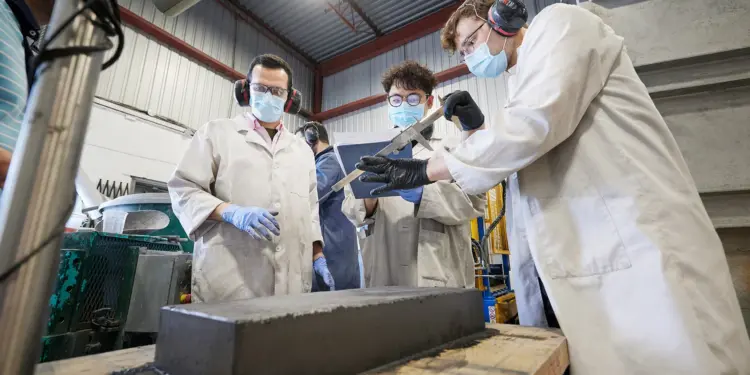
Perhaps the most promising material in self-growing construction is mycelium, the vegetative root structure of fungi. This remarkable organism grows rapidly, binds tightly to surrounding materials, and creates a substance stronger than concrete pound-for-pound. Companies like Ecovative and MycoWorks have already demonstrated that mycelium composites can replace plastics, leather, and building insulation.
In future applications, architects will inoculate substrate forms with fungal spores on site. Within days, the mycelium will consume agricultural waste materials and grow into predetermined shapes, creating walls that are fire-resistant, water-repellent, and naturally insulating. Unlike concrete production, which generates approximately eight percent of global carbon dioxide emissions, mycelium cultivation sequesters carbon. The material is also fully compostable at end of life, creating a circular system rather than a linear one.
Current research at institutions like the Massachusetts Institute of Technology’s Mediated Matter Group focuses on programming mycelium to grow in specific patterns through chemical cues. This represents a fundamental departure from subtractive manufacturing, where material is removed from a larger block, or even additive manufacturing, where material is deposited layer by layer. Instead, the material itself performs the construction.
Bamboo and Engineered Timber: Structural Systems That Regenerate
While mycelium excels at insulation and interior surfaces, structural loads require different solutions. Bamboo has supported human dwellings for millennia, but modern processing techniques are unlocking its full potential. Certain bamboo species grow up to three feet per day and reach structural maturity in three to five years, compared to thirty to fifty years for traditional timber. Laminated bamboo products now rival steel in tensile strength while weighing substantially less.
Cross-laminated timber has already transformed commercial construction, enabling wooden skyscrapers like the eighty-five-meter Mjøstårnet in Norway. The next generation of engineered wood will incorporate living tissues. Researchers at the University of Cambridge have developed methods to keep timber structures alive after harvest through advanced preservation techniques that maintain cellular function. These hybrid materials can respond to environmental conditions, opening and closing pores to regulate humidity and air quality.
Forest management will integrate with residential development. Homeowners will not purchase lumber from distant forests but will cultivate structural materials on their own property. A home’s load-bearing frame may begin as saplings planted in a specific geometric arrangement, trained through arboricultural techniques to grow into predetermined shapes. This approach transforms the home from a consumer of distant resources into a producer of local ones.
Photosynthetic Facades and Living Envelopes
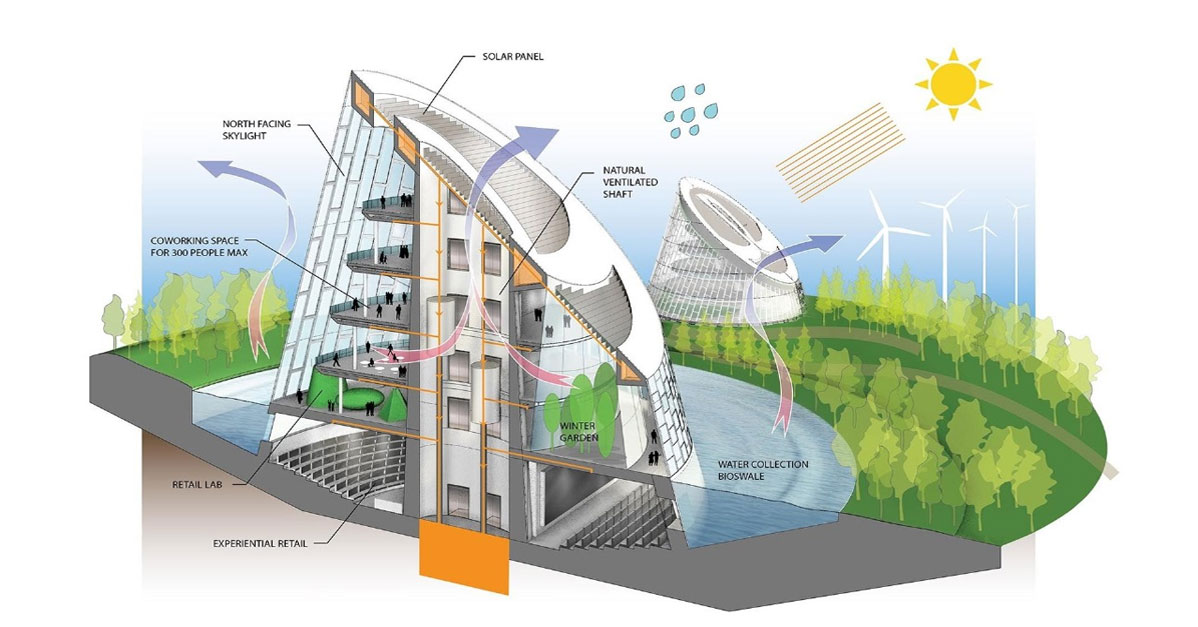
The exterior of future homes will not merely resist nature but embrace it. Photosynthetic facades integrate living plants, algae, or engineered biological materials into building envelopes. These systems provide insulation, produce food, generate energy, and filter air simultaneously.
Algae facades have already been demonstrated in projects like the BIQ House in Hamburg, where bioreactors integrated into the building skin cultivate microalgae that provide biomass for heating. The next generation will incorporate genetically optimized strains that produce specific compounds, from nutritional supplements to pharmaceutical precursors. The home becomes not merely shelter but a small-scale manufacturing facility.
Living walls have existed for decades, but current iterations require intensive maintenance and irrigation. Future versions will incorporate drought-resistant native species selected through machine learning algorithms that optimize for local conditions. These facades will communicate with internal environmental systems, adjusting shading and transpiration rates to maintain comfortable interior temperatures without mechanical heating or cooling.

Self-Healing Materials and Autonomous Maintenance
Even the most carefully designed structures eventually experience wear, damage, and degradation. Self-healing materials incorporate repair mechanisms inspired by biological systems. Concrete containing bacterial spores remains dormant until water penetrates cracks, at which point the bacteria germinate, consume calcium lactate, and precipitate calcite that seals the fracture. Similar approaches work for asphalt, plastics, and metal alloys.
These technologies eliminate vast amounts of maintenance labor and material consumption. A home that repairs its own foundation cracks, reseals its own roof membrane, and fills its own wall breaches requires substantially fewer resource inputs over its lifecycle. When combined with sensor networks that detect damage at microscopic scales, the structure achieves something approaching biological resilience.
Researchers at Binghamton University have developed fungal-based materials that not only self-heal but also increase in strength over time, the opposite of conventional materials. As the organism continues to grow within its substrate, it reinforces weak points and thickens stress-bearing regions. This represents a fundamental reconceptualization of building performance, shifting from the inevitability of degradation to the possibility of enhancement.
Integrated Water and Nutrient Cycles
Contemporary homes function as linear throughput systems. Water enters from municipal supplies, passes through fixtures and appliances, and exits to treatment facilities. Nutrients flow in as packaged goods and flow out as waste. Self-growing homes close these loops, treating water and nutrients as valuable resources to be captured, processed, and reused indefinitely.
Atmospheric water generators extract moisture from air, producing potable water even in arid regions. Greywater systems separate household wastewater into streams appropriate for irrigation, toilet flushing, and heat exchange. Blackwater processing units employ anaerobic digestion and constructed wetlands to extract energy and nutrients while returning clean water to circulation.
These systems integrate with the home’s biological components. Nutrient-rich water from bathing and laundry irrigates photosynthetic facades and food-producing gardens. Organic household waste feeds mycelial networks that strengthen structural elements. The home becomes an ecosystem rather than a machine, with waste from one subsystem serving as input for another.
Responsive Architecture and Artificial Intelligence
Physical growth requires direction. Artificial intelligence systems will serve as the central nervous system of self-growing homes, monitoring conditions, predicting needs, and directing structural development. Machine learning algorithms trained on thousands of buildings will identify optimal configurations for specific sites, orientations, and usage patterns.
Unlike current smart home systems that primarily control lighting, temperature, and entertainment, these platforms will manage biological processes. When sensors detect declining structural integrity, the AI may direct increased nutrient flow to specific mycelial colonies or adjust humidity to promote fungal healing. When energy production falls short of consumption, the system might reconfigure photosynthetic facade orientation or trigger algal bloom cycles.
These platforms will also facilitate what architectural theorist Christopher Alexander called “the unfolding of living structure.” Rather than imposing a static design solution, AI systems will continuously adapt the building to its inhabitants’ evolving needs. A family with young children requires different spatial configurations than empty nesters. Current homes demand expensive, disruptive renovations to accommodate these transitions. Future homes will grow new rooms and reabsorb unused ones, guided by AI systems that learn from occupant behavior.
Biophilic Integration and Human Health
The separation between indoors and outdoors, between domestic space and natural environment, dissolves in self-growing homes. This integration offers profound benefits for human health and wellbeing. Decades of research demonstrate that exposure to living systems reduces stress, improves cognitive function, and accelerates healing.
Hospital patients with views of trees recover faster and require less pain medication than those facing walls. Office workers with living plants demonstrate increased productivity and creativity. Children with access to natural play environments develop stronger immune systems and better emotional regulation. Self-growing homes make these benefits available continuously rather than requiring excursions to parks or wilderness areas.
The psychological implications extend beyond measurable health outcomes. Living in a home that grows, adapts, and responds creates a fundamentally different relationship between inhabitants and their environment. Rather than dominating nature through rigid, inert materials, residents participate in ongoing collaboration with living systems. This shift from extraction to cultivation, from consumption to stewardship, may prove essential for addressing the broader ecological crises of our era.
Economic Transformation and Democratized Housing
Contemporary housing costs have outpaced wage growth throughout the developed world, creating affordability crises that displace communities and concentrate wealth. Self-growing construction technologies offer pathways toward radically more accessible shelter. Mycelium composites cost a fraction of concrete and require minimal processing energy. Bamboo matures orders of magnitude faster than structural timber. On-site water and energy systems eliminate connection fees and monthly utility bills.
The economic implications extend beyond initial construction. Homes that produce their own energy, treat their own water, and grow their own structural reinforcements insulate inhabitants from commodity price volatility and infrastructure failures. Communities dependent on distant supply chains become vulnerable to disruption, as demonstrated by pandemic-related shortages. Communities building with local biological materials and closed-loop systems achieve genuine resilience.
Perhaps most significantly, these technologies shift power from centralized corporations to individual households and communities. You cannot patent bamboo or mycelium. While specific processing techniques and genetic modifications may be proprietary, the fundamental organisms and their cultivation methods belong to humanity’s common heritage. Open-source architectural designs, community seed banks for construction materials, and decentralized fabrication facilities could democratize housing production as thoroughly as the printing press democratized information.
Challenges and Limitations
Despite extraordinary potential, self-growing homes face substantial obstacles before achieving mainstream adoption. Building codes and standards developed around conventional materials cannot easily accommodate living construction. A mycelium wall that performs excellently in laboratory tests remains impossible to permit in most jurisdictions. Regulatory frameworks must evolve in parallel with technical capabilities.
Performance verification presents additional challenges. Steel and concrete behave predictably for decades because their molecular structures remain stable. Living materials change continuously, responding to moisture, temperature, nutrient availability, and countless other variables. Ensuring that a mycelium beam will support required loads for fifty years requires fundamentally different testing protocols than those developed for inert materials.
Public perception and cultural acceptance may prove the most difficult barriers. The association between fungal growth and decay, between moisture and structural failure, runs deep in architectural tradition. Convincing homebuyers that biological activity represents enhancement rather than deterioration requires substantial educational effort and compelling demonstration projects.
 The Path Forward
Several trajectories suggest how self-growing homes might transition from research laboratories to mainstream adoption. Early applications will likely target non-structural components like insulation, interior finishes, and landscaping elements. These present lower safety risks while demonstrating the technology’s capabilities and building regulatory acceptance.
Affordable housing represents particularly promising early adoption opportunities. Nonprofit developers serving low-income communities often operate outside conventional market constraints and prioritize long-term operating costs over initial construction expenses. Demonstration projects in this sector could prove the technology’s economic and performance advantages while addressing urgent shelter needs.
Luxury markets offer an alternative pathway. Early adopters with substantial resources have historically financed architectural innovation, from plate glass to central air conditioning. Commissioning a villa that incorporates photosynthetic facades and mycelial structure may appeal to clients seeking both environmental responsibility and technological sophistication.
Conclusion
The home that grows itself represents far more than technical innovation. It embodies a fundamental reconceptualization of humanity’s relationship with the built environment and, by extension, with the natural world. The twentieth-century ideal of dominating nature through technology, of constructing ever-larger barriers between human civilization and wild ecosystems, has proven ecologically catastrophic and psychologically impoverished.
The twenty-first-century alternative recognizes that human shelter need not oppose natural processes but can participate in them. A home that sequesters carbon rather than emitting it, that produces food and energy rather than consuming them, that heals its own wounds and adapts to its inhabitants’ needs, offers a vision of abundance rather than scarcity, of collaboration rather than domination.
This transformation will not occur overnight. The first self-growing homes will likely combine conventional foundations with experimental wall systems, mature timber frames with nascent mycelial infill. They will cost more than conventional construction and require specialized knowledge to maintain. But each successful project builds experience, confidence, and capability. The seeds planted today will grow into forests of homes that shelter humanity while restoring the planet.