The construction industry has long been viewed as one of the most stubborn contributors to global carbon emissions, responsible for nearly 40% of energy-related CO2 emissions worldwide. For decades, concrete the most widely used human-made material on Earth has been a primary culprit. Yet recent scientific breakthroughs have revealed something astonishing: under the right conditions, concrete can actually absorb carbon dioxide, transforming from an environmental villain into a potential climate hero. This discovery, which emerged unexpectedly during routine materials testing, has sent shockwaves through engineering and environmental science communities alike.
The Serendipitous Discovery That Changed Everything
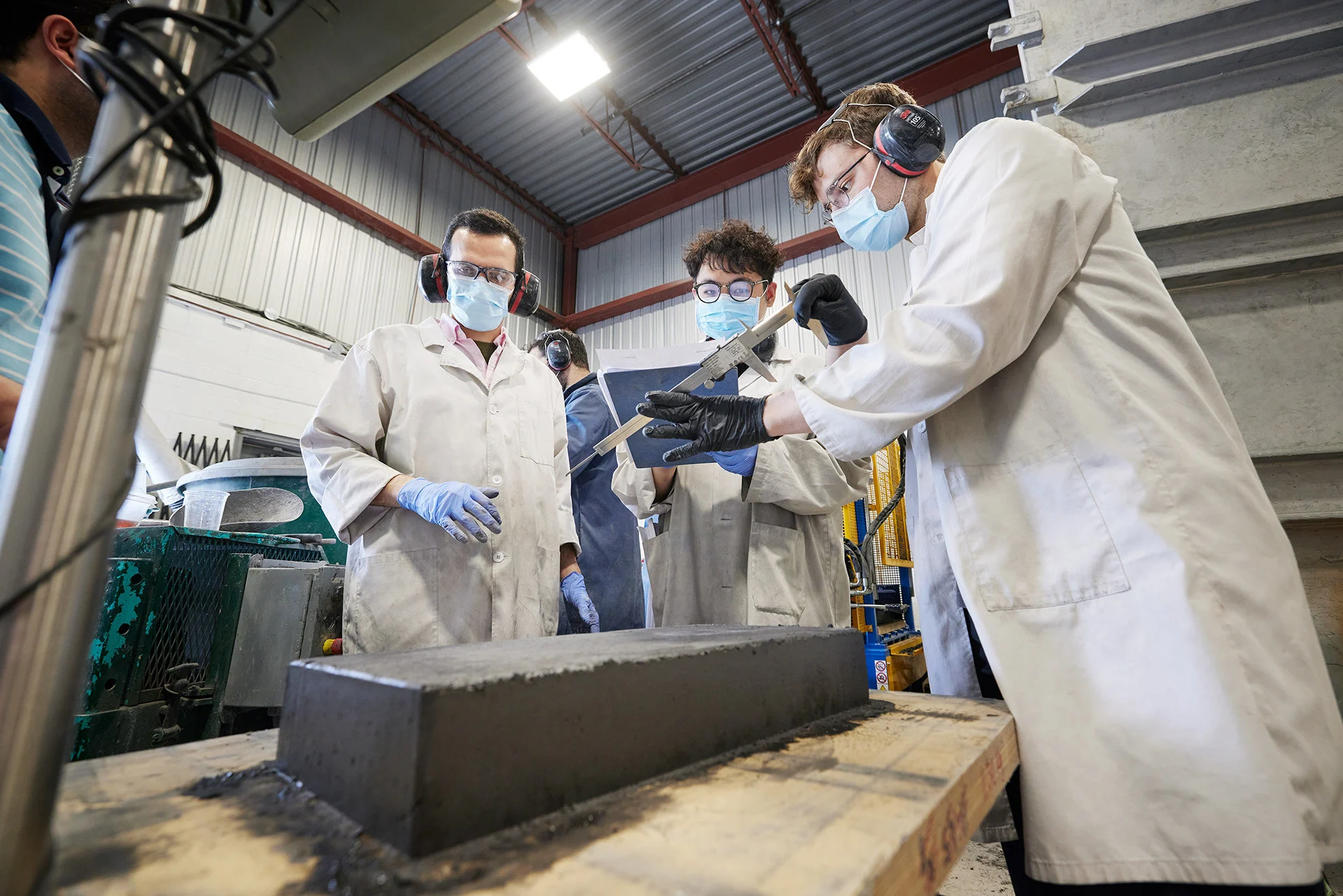
What makes this revelation particularly fascinating is that it was never the result of a deliberate search for carbon-absorbing materials. Researchers at prestigious institutions, including the University of California and the Massachusetts Institute of Technology, were conducting standard durability tests on various concrete mixtures when they noticed something peculiar. Samples that had been exposed to ambient air for extended periods showed measurable reductions in their carbon footprint not just stabilization, but actual decreases in embodied carbon.
This phenomenon, now understood as carbon mineralization, occurs when carbon dioxide from the atmosphere reacts with calcium hydroxide and calcium silicate hydrates within the concrete matrix. The chemical reaction forms stable calcium carbonate minerals essentially the same process nature uses to create limestone over millennia, but compressed into weeks or months under optimal conditions.
Dr. Sarah Chen, lead researcher at the Stanford Sustainable Materials Institute, explains: “We were initially skeptical. Conventional concrete science tells us that carbonation is actually a degradation mechanism that can corrode reinforcement steel. What we observed was fundamentally different—these materials were actively sequestering carbon while maintaining, and in some cases improving, their structural integrity.”
Understanding the Chemistry Behind Carbon-Eating Concrete
To appreciate why this discovery matters, one must first understand traditional concrete production. Ordinary Portland cement, the binding agent in conventional concrete, requires heating limestone and clay to approximately 1450°C. This process alone accounts for roughly 8% of global CO2 emissions—more than the entire aviation industry. The chemical reaction itself releases additional CO2 as limestone (calcium carbonate) decomposes into calcium oxide and carbon dioxide.
Carbon-eating concrete disrupts this narrative entirely. The sequestration process involves several distinct chemical pathways:
A. Direct carbonation occurs when gaseous CO2 dissolves in pore water to form carbonic acid, which then reacts with calcium-bearing phases to precipitate calcium carbonate.
B. Mineral carbonation involves the reaction of CO2 with magnesium or calcium silicates to form stable carbonates—a process thermodynamically favored but kinetically slow under natural conditions.
C. Biological carbonation leverages microorganisms that can precipitate calcium carbonate through metabolic processes, effectively “growing” cementitious materials.
D. Accelerated carbonation curing exposes fresh concrete to concentrated CO2 environments during manufacturing, dramatically speeding up the absorption process.
What surprised researchers most was the efficiency of these reactions under ambient conditions. While accelerated curing chambers achieve rapid results, even concrete in standard atmospheric conditions demonstrates measurable carbon uptake over its service life.
Quantifying the Carbon Sequestration Potential
The numbers emerging from recent studies are nothing short of remarkable. According to comprehensive lifecycle assessments published in Nature Sustainability, typical concrete structures can reabsorb approximately 15-20% of the CO2 released during cement production over a 100-year timeframe. When optimized through mixture design and exposure conditions, this figure potentially exceeds 40%.
Consider these findings from the Global Carbonation Project, an international collaborative research initiative:
A. Bridge structures with high surface-area-to-volume ratios demonstrate 35% higher carbon uptake compared to massive foundation elements.
B. Demolished concrete rubble, when crushed and exposed to air, can absorb up to 70% of its process emissions within decades significantly faster than intact structures.
C. Thin concrete elements such as building facades, pavements, and roof tiles achieve the highest sequestration rates due to optimal CO2 penetration.
D. Concrete containing supplementary cementitious materials like fly ash, slag, or natural pozzolans shows enhanced carbonation potential due to modified pore structures.
These findings suggest that the global concrete stock could serve as a significant carbon sink, potentially absorbing hundreds of millions of tons of CO2 annually if properly managed.

Engineering Implications and Structural Performance
One of the most persistent questions surrounding carbon-eating concrete concerns its mechanical properties. Traditional carbonation has long been associated with reinforcement corrosion as CO2 penetrates concrete, it reduces alkalinity, potentially compromising the protective passive layer on steel reinforcement. However, researchers have discovered crucial distinctions between deleterious carbonation and beneficial carbon sequestration.
Modern carbon-eating concrete formulations incorporate several protective strategies:
A. Controlled carbonation depths are achieved through precise mixture proportioning, ensuring that carbonation fronts do not reach reinforcement layers during design service life.
B. Stainless steel or epoxy-coated reinforcement can be specified for elements where maximum carbon uptake is desired alongside long-term durability.
C. Non-metallic reinforcement such as basalt fiber or carbon fiber composites eliminates corrosion concerns entirely while providing excellent structural performance.
D. Self-healing mechanisms triggered by carbonation reactions can actually seal microcracks, potentially extending service life rather than reducing it.
The engineering community has responded with cautious optimism. The American Concrete Institute has formed Technical Committee 231 on Carbonation Service Life Prediction, while RILEM (International Union of Laboratories and Experts in Construction Materials) has established a technical committee specifically addressing carbon sequestration in cement-based materials.
Economic Viability and Market Transformation
For any sustainable technology to achieve meaningful impact, economic viability must accompany environmental benefit. Carbon-eating concrete presents a complex but promising economic picture. The costs associated with optimizing mixtures for carbon uptake are relatively modest—primarily involving quality control measures and, in some cases, modified curing procedures.
Several revenue streams are emerging:
A. Carbon credits represent the most direct financial incentive. Verified carbon sequestration in concrete can generate tradable credits in voluntary and compliance carbon markets, with prices varying from $20 to over $100 per ton of CO2 equivalent.
B. Accelerated construction schedules become possible with carbonation curing, which can achieve early strength gains faster than traditional hydration methods, reducing formwork removal times and project durations.
C. Reduced cement content is achievable because carbonated concrete often develops higher early strength, allowing engineers to specify leaner mixtures while maintaining performance requirements.
D. Premium pricing for “green concrete” is increasingly viable as corporate sustainability commitments drive demand for low-carbon construction materials.
Major industry players have taken notice. Holcim, the world’s largest cement manufacturer, has committed to achieving net-zero concrete by 2050 and is actively commercializing carbon-sequestering products. CarbonCure Technologies has installed its CO2 mineralization systems in hundreds of concrete plants worldwide, claiming cumulative sequestration exceeding 150,000 tons of CO2.
Policy Landscape and Regulatory Developments
Government action is accelerating the adoption of carbon-eating concrete through multiple policy mechanisms. The infrastructure investment bills passed in several countries explicitly incentivize low-carbon materials. The European Union’s Carbon Border Adjustment Mechanism, while primarily targeting industrial emissions, has heightened awareness of embodied carbon throughout construction supply chains.
Notable policy developments include:
A. Buy Clean policies in the United States require federal infrastructure projects to prioritize materials with lower embodied carbon, creating significant market pull for carbon-sequestering concrete.
B. Building code revisions in progressive jurisdictions now incorporate whole-building lifecycle assessment requirements, favoring materials that demonstrate carbon storage capacity.
C. Public procurement preferences in countries including Canada, Japan, and Germany explicitly weight environmental product declarations when awarding construction contracts.
D. Research funding programs such as Horizon Europe and the US Department of Energy’s Advanced Research Projects Agency-Energy have directed substantial resources toward carbon-negative construction materials.
These policy signals have transformed carbon-eating concrete from an academic curiosity into a commercially relevant technology with clear market demand.
Limitations and Ongoing Research Challenges
Despite enormous progress, significant challenges remain before carbon-eating concrete achieves its full potential. Researchers are actively investigating several key areas:
A. Quantification methodology lacks standardization. Reliable, reproducible methods for measuring actual carbon uptake in field structures remain under development, complicating carbon credit verification.
B. Long-term durability of highly carbonated concrete in aggressive environments requires additional validation, particularly regarding freeze-thaw resistance and sulfate attack vulnerability.
C. Optimization algorithms for mixture design must balance competing objectives: maximum carbon uptake, adequate workability, sufficient strength development, and acceptable cost.
D. Scale-up manufacturing processes for carbonation curing require significant capital investment, particularly for precast operations seeking to retrofit existing facilities.
E. Feedstock availability for certain carbonation-enhancing additives may face supply constraints as demand scales, necessitating development of alternative materials.
The research community is responding with unprecedented collaboration between materials scientists, structural engineers, environmental economists, and policy analysts a recognition that solving the concrete carbon problem requires multidisciplinary approaches.
Global Implementation Case Studies
Carbon-eating concrete has progressed from laboratory demonstration to real-world application. Notable projects demonstrate both feasibility and scalability:
In Singapore, the Jurong Rock Caverns project incorporated carbonated concrete for underground infrastructure, leveraging the city-state’s aggressive sustainability targets. Monitoring data indicates sequestration rates exceeding laboratory predictions, attributed to optimal humidity conditions.
Norway’s coastal infrastructure program has specified carbon-sequestering concrete for harbor upgrades, with designers citing both environmental benefits and enhanced marine durability as deciding factors. Five years of exposure testing show minimal degradation despite harsh Nordic conditions.
California’s high-speed rail project includes pilot sections using carbonated concrete for sound barriers and drainage structures. The state’s Department of Transportation has developed provisional specifications allowing carbon uptake to count toward project sustainability metrics.
Australia’s coal mining regions present an intriguing application using mine tailings rich in magnesium silicates as concrete aggregates that actively carbonate when exposed to ambient CO2, simultaneously sequestering carbon and utilizing waste materials.
Future Trajectories and Transformative Potential
Looking forward, carbon-eating concrete may represent merely the first step toward truly carbon-negative construction materials. Emerging research directions suggest even more ambitious possibilities:
A. Direct air capture integration could embed CO2-absorbing materials within building ventilation systems, transforming structures into active carbon removal devices.
B. Biogenic carbonation using microbially induced calcium carbonate precipitation might eventually allow concrete that “grows” stronger over time through biological processes.
C. Carbon-negative aggregates manufactured from mineralized CO2 could replace virgin crushed stone, creating circular carbon economies within the construction sector.
D. Predictive service life models incorporating carbonation kinetics will enable engineers to design structures that maximize sequestration while ensuring century-scale durability.
The implications extend beyond climate mitigation. Nations with limited limestone reserves but abundant CO2 sources could develop new industrial capabilities. Construction specifications that currently mandate minimum cement contents might evolve toward performance-based requirements emphasizing carbon storage. Real estate valuations could increasingly reflect the carbon sequestered within building materials.
Conclusion: Rethinking Concrete’s Climate Narrative
The discovery that concrete can eat carbon fundamentally challenges entrenched assumptions about construction materials and environmental responsibility. No longer can concrete be dismissed as an unavoidable climate liability it represents one of the most scalable carbon removal technologies currently available to humanity.
Yet realizing this potential requires systemic changes. Designers must learn to specify for carbon uptake, not just strength and workability. Regulators must develop verification protocols that reward actual sequestration. Investors must recognize the long-term value creation opportunities embedded in carbon-absorbing infrastructure.
Perhaps most profoundly, this discovery reminds us that solutions to environmental challenges often emerge from unexpected places. The same material that built the Roman Pantheon, the Hoover Dam, and the Burj Khalifa a material so ubiquitous it literally forms the foundation of modern civilization may yet help save that civilization from climate catastrophe. Carbon-eating concrete surprised scientists, but its greatest surprises may still lie ahead as researchers, engineers, and entrepreneurs unlock its full potential.
The concrete jungle, it seems, might just breathe after all.