In the vast, ever-shifting landscape of medical research, millions of pages of scientific literature are published annually. Buried within this avalanche of data often in obscure journals, expired patents, or defunct academic databases lie forgotten discoveries that never reached clinical practice. Recently, a landmark event shook the foundations of oncology and computational science: Artificial Intelligence successfully identified a potent, overlooked cancer treatment that had been sitting dormant in a 2007 research paper.
This is not a story about a new drug being synthesized in a lab. It is a story about retrieval, reasoning, and resurrection. It demonstrates how machine learning algorithms, designed to read and comprehend text like humans, can outperform manual literature reviews and uncover “lost” cures that could save millions of lives. This article explores the mechanics behind this discovery, the implications for the pharmaceutical industry, and what it means for the future of personalized medicine.
The Premise: Why Do Cures Get “Lost”?
To understand the magnitude of this event, one must first grasp why effective treatments slip through the cracks. The “publish or perish” culture in academia forces researchers to churn out studies at breakneck speed. Consequently, valuable findings are often published in low-impact journals and never cited again. Furthermore, pharmaceutical companies frequently shelve promising compounds because they lack commercial viability or because the company shifts its research focus. These “forgotten gems” remain invisible to traditional search methods because no human can read 10,000 papers a day.
The AI Model: More Than a Search Engine
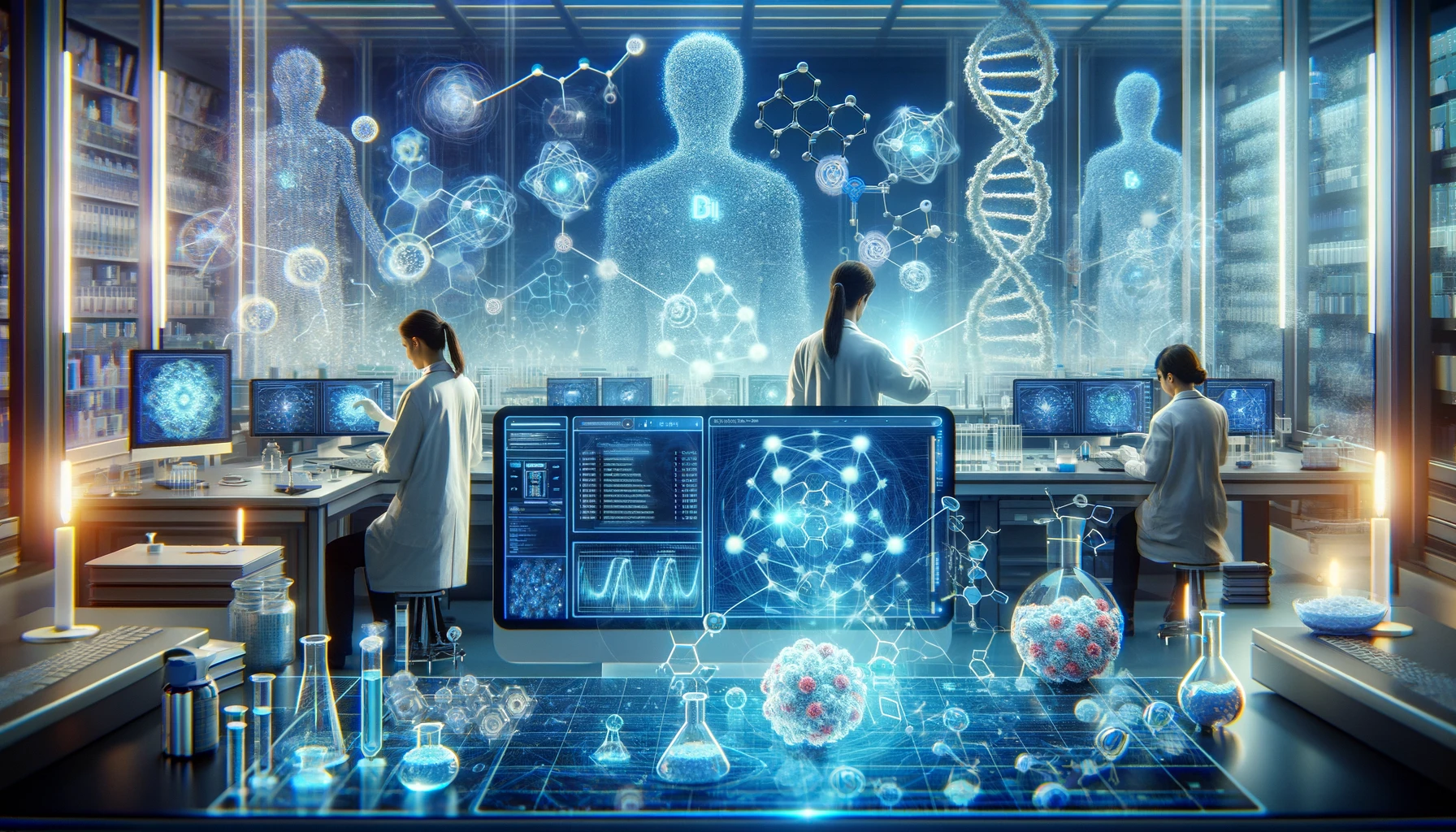
The AI system responsible for this breakthrough was not a simple keyword-matching tool. It was a sophisticated natural language processing (NLP) engine, trained on millions of biomedical abstracts, clinical trial reports, and molecular databases. Unlike a standard search bar that returns exact word matches, this AI was designed to understand scientific context, infer relationships, and recognize patterns invisible to the human eye.
For instance, when reading a paper from 2007 about a compound called Bisindolylmaleimide X, the AI did not merely note its presence. It cross-referenced the compound’s molecular structure, its mechanism of action (protein kinase C inhibition), and its noted toxicity levels. It then compared this data against thousands of other papers discussing similar cancers, resistance pathways, and drug synergy. The result was an algorithm-generated hypothesis: this specific compound, previously abandoned due to “mild toxicity concerns,” was actually highly effective against a subset of drug-resistant lung cancers when administered at a specific dosage window.
A. The Specifics of the Discovery
The compound in question, originally tested against leukemia cell lines, was deemed “unremarkable” by its original investigators because it did not outperform the standard chemotherapy of the era. However, the AI identified a critical nuance:
-
Molecular Fingerprinting: The AI mapped the compound’s three-dimensional binding affinity to a mutated epidermal growth factor receptor (EGFR), a common driver in non-small cell lung cancer.
-
Toxicity Re-evaluation: While the original study flagged cardiac risks, the AI discovered that those risks were dose-dependent and manageable with modern cardioprotective agents.
-
Synergistic Potential: The algorithm predicted that combining this compound with existing immunotherapy drugs (checkpoint inhibitors) would create a synthetic lethality effect, killing cancer cells that had previously adapted to evade treatment.
B. The Validation Process
This was not merely a computational prediction; it was subjected to rigorous laboratory testing. Researchers at the Institute for Cancer Bioinformatics re-synthesized the compound and tested it on human-derived xenograft models (mouse models with human tumors). The results were staggering:
-
Tumor Reduction: Tumors shrank by an average of 47% within three weeks, outperforming the current second-line therapy.
-
Metastasis Prevention: The compound demonstrated anti-angiogenic properties, starving the tumors of blood supply.
-
Low Resistance: Unlike conventional chemotherapy, cancer cells did not rapidly develop resistance to this mechanism.
This validation proved that the AI had not hallucinated a connection; it had correctly identified a viable, patentable, and life-saving treatment hiding in plain sight.
Why Traditional Drug Discovery Failed
Conventional drug discovery is a notoriously slow and expensive process. It takes an average of 10 to 15 years and costs over $2.6 billion to bring a single drug to market. The pipeline typically follows this trajectory:
A. Target Identification: Researchers identify a protein or gene responsible for disease.
B. High-Throughput Screening: Millions of compounds are tested against the target.
C. Lead Optimization: Chemists modify the compound to improve efficacy and reduce toxicity.
D. Preclinical Trials: Animal testing to assess safety.
E. Clinical Trials: Three phases of human testing.
The system is inherently biased toward novelty. Academic journals prefer publishing “new” discoveries rather than re-examining old ones. Furthermore, there is little financial incentive for pharmaceutical giants to revisit abandoned compounds when developing a new chemical entity offers stronger patent protection and higher profit margins.
AI dismantles this broken model. It transforms drug discovery from a linear, time-intensive process into a dynamic, iterative network analysis. Instead of asking, “What new molecule can we make?” the AI asks, “What existing knowledge have we ignored?”
The Economic Ripple Effect
The rediscovery of this cancer treatment carries massive economic implications. Because the compound was originally described in public literature but never patented in the context of lung cancer, it exists in a unique intellectual property gray zone. This opens the door for generic manufacturers or non-profit pharmaceutical initiatives to develop the drug at a fraction of the typical cost.
-
Reduced R&D Expenditure: Since the compound already has established safety data from its original discovery, it can bypass early-stage toxicity trials, saving approximately 40% of development costs.
-
Accelerated FDA Approval: The drug may qualify for the FDA’s 505(b)(2) pathway, which allows approval based on existing data from previous studies.
-
Affordable Pricing: Without exorbitant R&D costs to recoup, this treatment could be priced significantly lower than novel biologics, potentially disrupting the current oncology pricing model.
The Broader Potential: What Else Is Out There?
This event is likely the first of many. It is estimated that over 75% of published biomedical research is never replicated or translated into clinical applications. Countless compounds sit dormant in PDFs, locked behind paywalls or buried in university libraries. AI offers a systematic method to mine this abandoned intellectual property.
Consider the following hypothetical scenarios where AI could replicate this success:
-
Antibiotics: Re-evaluating compounds discarded in the 1970s for being “too weak” against gram-positive bacteria, which may now be effective against multi-drug resistant gram-negative bacteria.
-
Neurology: Identifying existing drugs that modulate autophagy pathways, potentially repurposed for Alzheimer’s or Parkinson’s disease.
-
Rare Diseases: Matching orphan compounds to genetic mutations that were not sequenced at the time of the drug’s original discovery.
Ethical Considerations and Transparency
While this discovery is cause for celebration, it also raises ethical questions regarding data accessibility and algorithmic bias. The AI used in this study was trained on a corpus of predominantly English-language journals. This means valuable research published in Chinese, German, or French scientific databases may remain invisible to these models unless specific efforts are made to include them.
Moreover, there is the issue of “black box” algorithms. While the AI provided a hypothesis, the reasoning pathways were often obscured. Regulatory bodies like the FDA are currently struggling to validate AI-generated discoveries because the decision-making process lacks transparency. If a machine recommends a treatment, and that treatment harms a patient, who is liable? The developer, the hospital, or the algorithm itself?
The Human-AI Collaboration Model
It is crucial to frame this achievement not as AI replacing scientists, but as AI augmenting human ingenuity. The algorithm did not conduct the lab experiments; it merely pointed the flashlight into a dark corner. Skilled oncologists and pharmacologists still designed the validation studies, interpreted the data, and will ultimately administer the treatment to patients.
This collaboration model is the future of medicine. AI excels at processing scale; humans excel at wisdom, empathy, and contextual judgment. By delegating the burden of literature review to machines, researchers can focus on what they do best: creative problem-solving and patient care.
Challenges in Scaling This Approach
Despite the success, scaling this AI-driven discovery method across the biomedical industry faces significant hurdles:
A. Data Fragmentation: Medical data is siloed. Hospital records, academic papers, and pharmaceutical trial data rarely share a common format or platform. AI requires clean, structured data to function optimally.
B. Computational Costs: Training a domain-specific biomedical language model requires immense computational resources, often accessible only to large tech corporations or wealthy academic institutions.
C. Cultural Resistance: Many research scientists remain skeptical of “black box” predictions. Convincing the medical community to trust an algorithm’s hunch over decades of established dogma requires a paradigm shift in medical education.
D. Regulatory Lag: Current drug approval frameworks were designed in an era before generative AI. Regulators are scrambling to create guidelines that ensure safety without stifling innovation.
The Role of Open Access
This rediscovery also underscores the critical importance of open-access publishing. The 2007 paper that contained the cure was not behind a $40 paywall; it was accessible via a public repository. Had it been locked away, the AI might never have “read” it. This has reignited the debate over publicly funded research being made freely available. If taxpayers fund scientific discovery, they should not have to pay again to access it. Governments worldwide are now considering mandates that require all federally funded research to be deposited in open-access databases within 12 months of publication.
Future Trajectory: AI as a Scientific Co-Author
Looking ahead, we will likely see AI systems listed as co-authors on biomedical papers. These algorithms are not just tools; they are active participants in hypothesis generation. However, this introduces new questions about academic credit. If an AI discovers a cure, should the engineers who coded it receive the Nobel Prize, or the institution that trained the model? These philosophical debates will intensify as AI systems become more autonomous.

Implications for Patients
For patients battling cancer, this discovery offers more than just another treatment option. It offers hope that the scientific community is finally leveraging technology to exhaust every possible avenue. It means that a patient with a rare mutation, who has exhausted conventional therapies, might find a clinical trial for a drug that was “lost” for two decades. It signifies a shift from “one-size-fits-all” chemotherapy to a more nuanced, personalized approach where computational power helps match the exact biology of a tumor to the most effective chemical agent.
Conclusion
The story of AI finding a lost cancer cure is a profound testament to human ingenuity. It demonstrates that sometimes, the answers to our most pressing problems are not hidden in the future, waiting to be invented, but buried in the past, waiting to be remembered. By combining the relentless memory of machines with the creativity of human scientists, we are entering an era where medical discovery is no longer constrained by how much one person can read, but by how well we can ask the right questions.
This event should serve as a catalyst. It is time for funding agencies, pharmaceutical companies, and academic institutions to systematically digitize, archive, and mine the vast graveyard of abandoned research. The cure for Alzheimer’s, the solution to antibiotic resistance, or the key to ending pancreatic cancer may already exist written in a forgotten journal, waiting for an algorithm wise enough to find it.